Quick answer · 짧은 답
Pain that only turns up after you stop running. Why muscles work in pairs, what a foam roller can and can't reach, and how your shoulder shows it best.
달릴 땐 괜찮다가 멈추면 오는 통증. 근육이 짝을 이뤄 일하는 이유와, 폼롤러가 닿는 곳과 닿지 못하는 곳, 그리고 이 모든 게 가장 잘 보이는 어깨 이야기를 담았습니다.
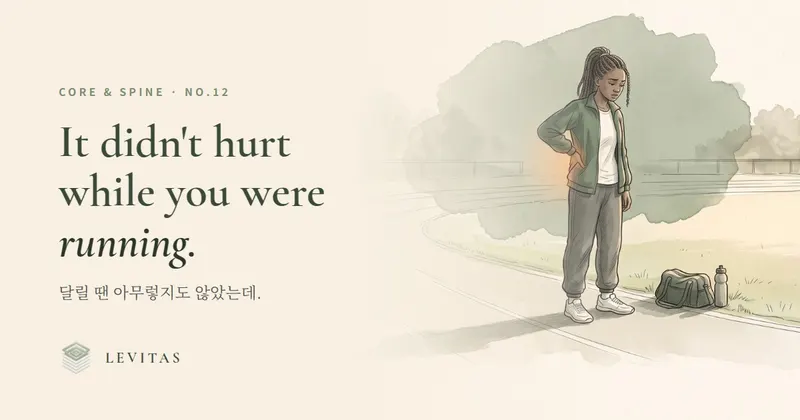
It turns up after you stop. You're standing there catching your breath and there it is, same spot as last week. And somewhere along the way you started planning your days around it without really noticing.
멈추고 나서야 옵니다. 숨을 고르며 서 있는데 지난주와 똑같은 자리가 또 아픕니다. 그러다 어느새 그 자리를 피해서 하루를 짜고 계십니다.
Muscles never work alone
근육은 혼자 일하지 않습니다
Bend your elbow and the biceps shortens while the triceps lets go. Straighten it and the two swap jobs. That trade is happening all over your body, all day, and most of the time you never think about it.
팔꿈치를 굽히면 이두근이 짧아지는 동안 삼두근은 힘을 놓습니다. 다시 펴면 둘이 역할을 바꿉니다. 이 주고받기가 온몸에서 하루 종일 벌어지는데, 평소에는 생각조차 하지 않고 지냅니다.
Sometimes neither side moves at all. Standing in a queue, holding a bag, sitting through a long class. The muscle keeps its length and just holds on. We call that posture, and it's working right now while you read this.
줄을 서 있을 때, 가방을 들고 있을 때, 긴 수업을 앉아서 들을 때. 근육은 길이를 그대로 둔 채 버티기만 합니다. 그것을 자세라고 부릅니다. 지금 이 글을 읽는 동안에도 하고 있습니다.
A muscle is strongest when it lets go slowly
근육이 내는 가장 큰 힘은 천천히 놓아 줄 때 나옵니다
Not the lifting. The lowering, and the landing. A muscle produces more force while it lengthens under load than while it shortens, and it does it at a lower energy cost.⁴ That's the brake, and on a downhill stride it's the busiest thing in your leg.
드는 순간이 아니라 내리는 순간, 착지하는 순간입니다. 근육은 부하를 받으며 늘어날 때 짧아질 때보다 더 큰 힘을, 그것도 더 적은 에너지로 만들어냅니다.⁴ 그것이 브레이크입니다. 내리막을 달릴 때 다리에서 가장 바쁘게 일하는 것도 이 브레이크입니다.
Think of a dumbbell curl. On the way up the biceps gets shorter. On the way down the same biceps gets longer, and it is still pulling the whole time. If it let go completely, the weight would just drop.
덤벨 컬을 떠올려 보십시오. 올릴 때는 이두근이 짧아집니다. 내릴 때는 같은 이두근이 길어지는데, 그동안에도 계속 당기고 있습니다. 완전히 놓아 버리면 덤벨은 그냥 떨어집니다.
When the brake is late or weak, that load doesn't disappear. Something else takes it, usually the next joint along.
브레이크가 늦거나 약하면 그 부하가 사라지지는 않습니다. 다른 곳이 대신 받습니다. 대개는 바로 옆 관절입니다.
Nothing in there is ever fully off
몸 안에서 완전히 쉬고 있는 근육은 없습니다
We talk about stretching as though a muscle switches off and goes slack. In real movement it never does. While one side shortens, the other side keeps a steady pull as it lengthens, and that steady pull is what holds the joint in the middle of itself. Let one side go genuinely slack and the joint loses the first thing that was protecting it.
스트레칭이라고 하면 근육이 힘을 완전히 빼고 늘어지는 상태를 떠올리기 쉽습니다. 그런데 실제 움직임에는 그런 구간이 없습니다. 한쪽이 짧아지는 동안 반대쪽은 늘어나면서도 팽팽함을 유지합니다. 관절을 제 가운데에 잡아 두는 것이 바로 그 팽팽함입니다. 한쪽이 정말로 늘어져 버리면 관절은 자기를 지켜 주던 첫 번째 보호막을 잃습니다.
And the body doesn't stop and wait. It borrows stability from wherever it can reach, usually by gripping harder than the job needs.
그런데 몸은 거기서 멈춰 서지 않습니다. 안정감을 어디서든 빌려 오는데, 대개는 필요한 것보다 훨씬 꽉 붙잡는 방식입니다.
Your shoulder shows this better than anywhere
이것이 가장 잘 보이는 곳이 어깨입니다
Raising your arm overhead is not one joint's job. The head of the upper arm bone turns inside its socket while the shoulder blade rotates upward underneath it, roughly two degrees at the head for every one at the blade. When the head stops moving well, the arm still goes up. The blade simply hitches toward your ear instead of rotating.
팔을 머리 위로 드는 것은 관절 하나가 하는 일이 아닙니다. 윗팔뼈의 머리가 소켓 안에서 돌아가는 동안, 그 아래에서 견갑골이 위로 회전해 주어야 합니다. 윗팔뼈의 머리가 2도쯤 움직이면 견갑골이 1도쯤 도는 비율입니다. 이 머리가 잘 움직이지 않게 되어도 팔은 그대로 올라갑니다. 대신 견갑골이 돌아가지 않고 귀 쪽으로 으쓱 올라갑니다.
From the outside the arm looks like it made it all the way up. Underneath, the space the tendon passes through has narrowed, and the muscles along the top of the shoulder and the side of the neck have been pulled into a job that was never theirs. A lot of the neck tightness and the headaches people bring in start right here.
겉에서 보면 팔이 끝까지 올라간 것처럼 보입니다. 그런데 안쪽에서는 힘줄이 지나가는 자리가 좁아져 있고, 어깨 위와 목 옆의 근육들이 원래 자기 몫이 아닌 일에 끌려 나와 있습니다. 목이 뻣뻣하다고, 두통이 있다고 오시는 분들의 시작점이 여기인 경우가 많습니다.
Whether that narrowing is what wears the tendon, or whether the tendon was already changing and the narrowing followed, is still argued about.⁶ Most people who study it think both are in play.⁷ What nobody argues about is that the movement pattern is worth looking at.
그 좁아짐이 힘줄을 상하게 하는 것인지, 아니면 힘줄이 먼저 변하고 좁아짐이 따라온 것인지는 아직도 의견이 갈립니다.⁶ 연구하는 사람들 대다수는 둘 다 작용한다고 봅니다.⁷ 다만 움직임 패턴을 들여다볼 가치가 있다는 데에는 이견이 없습니다.
A joint has to roll and slide at once
관절은 구르면서 동시에 미끄러져야 합니다
If a joint only rolls, one side gets squeezed and the other side gapes open. Healthy joints never roll on their own, and the layers of tissue around them are built to slide across each other too. In people with long-standing back pain, that sliding measures about a fifth lower than in people without it.⁵ Which one comes first isn't settled. What we can say is that the two keep turning up together.
관절이 구르기만 하면 한쪽은 눌리고 반대쪽은 벌어집니다. 정상적인 관절은 구르기만 하는 법이 없습니다. 그 주변 조직 층들도 서로 미끄러지도록 되어 있습니다. 오래 요통을 겪은 분들에게서는 이 미끄러짐이 그렇지 않은 분들보다 5분의 1가량 적게 측정됩니다.⁵ 무엇이 먼저인지는 아직 결론이 나지 않았습니다. 다만 둘이 늘 함께 나타난다는 것은 말씀드릴 수 있습니다.
So the tight side has to come down first
그래서 조인 쪽부터 내려놓아야 합니다
Everything above points the same direction. A muscle that has been holding on too hard for months is why the brake is late, and it is why the joint underneath it stops sliding. Turn that tone down and the rest of it has room to move again.
여기까지의 이야기가 모두 한 방향을 가리킵니다. 몇 달째 힘을 붙들고 있는 근육이 있어서 브레이크가 늦고, 그 아래 관절도 미끄러지기를 멈춥니다. 그 긴장을 내려놓게 해 주면, 나머지가 다시 움직일 자리가 생깁니다.
That is exactly what a foam roller is for, and it is why I keep recommending one.
폼롤러가 하는 일이 바로 그것입니다. 제가 계속 권해 드리는 이유이기도 합니다.
The roller is doing more than you think
폼롤러는 생각보다 많은 일을 하고 있습니다
We tend to talk about foam rolling as if it only deals with tightness. It does far more than that, and the part that matters most happens after you get up off the mat.
폼롤링을 이야기할 때 흔히 뭉친 걸 푸는 일로만 여깁니다. 실제로는 그보다 훨씬 많은 일을 하고 있고, 정작 중요한 일은 매트에서 일어난 다음에 벌어집니다.
Pressure on the tissue raises the threshold at which you feel pain, and it lets an overworked muscle drop its guard. Then the circulation changes. Blood flow through the area you rolled increases sharply right afterward, and it is still running well above baseline half an hour later.¹ Arteries in the region become less stiff and the vessel lining works better.²
조직에 압력이 가해지면 통증을 느끼는 문턱이 올라가고, 과하게 일하던 근육이 경계를 풉니다. 그다음에 순환이 달라집니다. 폼롤링을 한 부위의 혈류가 직후에 크게 늘고, 30분이 지난 뒤에도 평소보다 훨씬 높은 상태로 유지됩니다.¹ 그 부위의 동맥은 덜 뻣뻣해지고 혈관 안쪽 벽도 더 잘 일합니다.²
That matters because a muscle that has been gripping for months has been living on a thin supply. More blood through it means more oxygen and more of what the tissue needs to rebuild, and it means the waste products that build up in a tired area finally have somewhere to go. Tissue repair is a job your body already knows how to do. It just needs the delivery route open.
이게 왜 중요한가 하면, 몇 달째 힘을 붙들고 있던 근육은 그동안 빠듯한 공급으로 버텨 왔기 때문입니다. 피가 더 돈다는 것은 산소가 더 들어가고, 조직이 다시 지어질 때 필요한 것들이 더 들어간다는 뜻입니다. 그리고 지친 자리에 쌓여 있던 노폐물이 드디어 빠져나갈 길이 생긴다는 뜻이기도 합니다. 조직을 고치는 일은 우리 몸이 이미 할 줄 아는 일입니다. 다만 그 길이 열려 있어야 합니다.
There is one more piece. Connective tissue keeps itself in shape by being loaded and moved. Take the load and the movement away for long enough and it starts winding down.³ Rolling is not a substitute for training, but it is one of the ways you keep telling that tissue it is still in use.
한 가지가 더 있습니다. 결합조직은 부하를 받고 움직여야 제 모습을 유지합니다. 부하와 움직임이 오래 사라지면 조직은 서서히 힘을 잃습니다.³ 폼롤링이 운동을 대신하지는 못하지만, 그 조직에게 아직 쓰이고 있다고 계속 알려 주는 방법 중 하나입니다.
It is also something you can do at home, on your own schedule, without booking anything. I hand a roller to almost everybody who walks in.
무엇보다 집에서, 원하시는 시간에, 예약 없이 하실 수 있습니다. 저는 오시는 분들께 거의 빠짐없이 폼롤러를 권해 드립니다.
Rolling is care you give yourself. Finding the segment is an exam.
폼롤링은 스스로 하시는 관리이고, 멈춘 마디를 찾는 것은 검사입니다
Rolling changes tone and it opens circulation, and you can give yourself that every evening. What it cannot do is tell you which segment stopped moving in the first place.
폼롤링은 긴장을 바꾸고 순환을 열어 줍니다. 매일 저녁 스스로 해 주실 수 있는 일입니다. 다만 어느 마디가 애초에 멈춰 섰는지는 폼롤링으로 알 수 없습니다.
That is an examination. Palpating a spine segment by segment, feeling how each one responds as you bend and breathe and turn, and telling apart a joint that is genuinely restricted from one that is simply sore, is a clinical skill. It takes training, and it takes a second person, because you cannot palpate your own mid back.
그건 검사에 해당합니다. 척추를 마디마디 짚어 가며 굽히고 숨 쉬고 돌아볼 때 각 마디가 어떻게 반응하는지 느끼고, 정말로 움직임이 제한된 관절과 그저 아픈 관절을 구별해 내는 것은 훈련이 필요한 임상 기술입니다. 그리고 사람이 한 명 더 있어야 합니다. 자기 등 한가운데는 스스로 짚을 수 없으니까요.
Once we know which segment it is, the rolling you're already doing has an address.
어느 마디인지 알고 나면, 이미 하고 계신 폼롤링에 주소가 생깁니다.
Not every roller suits every back
모든 등에 같은 폼롤러가 맞는 것은 아닙니다
A dense roller on a mid back that is already irritated will make the next morning worse, not better. A soft one on a thigh that needs real pressure will do very little. The same goes for how long you stay on a spot, and whether that area should be rolled at all this week.
이미 예민해진 등에 단단한 폼롤러를 쓰시면 다음 날 아침이 더 힘들어집니다. 반대로 제대로 눌러 줘야 하는 허벅지에 말랑한 롤러를 쓰시면 거의 아무 일도 일어나지 않습니다. 한 자리에 얼마나 머무르실지, 이번 주에 그 부위를 아예 건드리지 않는 편이 나은지도 마찬가지입니다.
So part of what we work out together is which one belongs in your hands, where to use it, and how long for. You take that home and it keeps working between visits.
그래서 어떤 것을 손에 쥐시는 게 맞는지, 어디에 어떻게 얼마나 쓰실지를 함께 정합니다. 그 답을 가지고 돌아가시면 방문과 방문 사이에도 계속 도움이 됩니다.
What a first visit looks like
첫 방문은 이렇게 진행됩니다
We listen before we look. What a normal week actually looks like for you. How you sleep, what kind of training you do and how much of it, when this started and what makes it worse.
보기 전에 먼저 듣습니다. 한 주를 어떻게 보내시는지부터 여쭙니다. 잠은 어떠신지, 어떤 운동을 얼마나 하시는지, 언제부터였고 어떨 때 더 심해지는지.
We find out what your back is doing. Hands, movement, and a look at how each segment behaves when you bend, breathe and turn.
등이 실제로 어떻게 움직이는지 확인합니다. 손으로 만져 보고, 움직여 보고, 굽히고 숨 쉬고 돌아볼 때 마디마디가 어떻게 움직이는지 살펴봅니다.
You leave knowing what you're working with. What we found, what it means, and what to do at home with the roller you already own. In English or in Korean, whichever you'd rather.
무엇을 다루고 있는지 아신 채로 돌아가십니다. 무엇을 찾았고 그것이 무슨 뜻인지, 이미 가지고 계신 폼롤러로 집에서 무엇을 하시면 되는지 정리해 드립니다. 영어로도 한국어로도, 편하신 쪽으로 말씀드립니다.
A note from Kilbo Yun, D.C.
윤 원장의 글
I recommend a foam roller to almost everyone who comes in. Twelve years as a trainer taught me that the people who look after themselves between visits are the ones who do well, and I would far rather you had something in your own hands than have to book an appointment every time this flares. All I want is for that rolling to land on the right thing.
저는 오시는 분들께 거의 빠짐없이 폼롤러를 권해 드립니다. 트레이너로 지낸 12년이 가르쳐 준 것이 있다면, 방문과 방문 사이에 스스로를 돌보시는 분들이 결국 더 잘 지내신다는 사실입니다. 불편할 때마다 어딘가를 예약하시는 것보다, 손에 쥘 수 있는 도구가 하나 있는 편이 훨씬 낫습니다. 제가 바라는 것은 그 폼롤링이 정확한 자리에 닿는 것뿐입니다.
Please don't work on it alone if
이럴 때는 혼자 풀려고 하지 마세요
Pain wakes you at night, or doesn't change however you sit or lie down.
Numbness, weakness, or pins and needles run down an arm or a leg.
New pain after a fall, a crash, or any accident.
Fever, weight loss you can't explain, or trouble controlling your bladder or bowels. Call 911 or go to an emergency room.
밤에 잠을 깨우는 통증이거나, 어떻게 앉고 누워도 달라지지 않을 때
팔이나 다리로 저림이 내려가거나, 힘이 빠지는 느낌이 있을 때
넘어지거나 사고를 겪은 뒤에 없던 통증이 생겼을 때
열이 나거나, 이유 없이 체중이 줄거나, 대소변 조절이 어려우실 때는 911에 전화하시거나 응급실로 가셔야 합니다
Book a visit · 예약하기
Levitas Chiropractic & Wellness
23700 Edmonds Way, Edmonds, WA 98026
425-871-1083 · levitaschiropractic.com
Come in heavy. Leave a little lighter.
References · 참고 문헌
Hotfiel T, Swoboda B, Krinner S, et al. Acute effects of lateral thigh foam rolling on arterial tissue perfusion determined by spectral Doppler and power Doppler ultrasound. Journal of Strength and Conditioning Research. 2017;31(4):893-900.
Okamoto T, Masuhara M, Ikuta K. Acute effects of self-myofascial release using a foam roller on arterial function. Journal of Strength and Conditioning Research. 2014;28(1):69-73.
Kjaer M. Role of extracellular matrix in adaptation of tendon and skeletal muscle to mechanical loading. Physiological Reviews. 2004;84(2):649-698.
Franchi MV, Reeves ND, Narici MV. Skeletal muscle remodeling in response to eccentric vs. concentric loading: morphological, molecular, and metabolic adaptations. Frontiers in Physiology. 2017;8:447.
Langevin HM, Fox JR, Koptiuch C, et al. Reduced thoracolumbar fascia shear strain in human chronic low back pain. BMC Musculoskeletal Disorders. 2011;12:203.
Harrison AK, Flatow EL. Subacromial impingement syndrome. Journal of the American Academy of Orthopaedic Surgeons. 2011;19(11):701-708.
Seitz AL, McClure PW, Finucane S, Boardman ND, Michener LA. Mechanisms of rotator cuff tendinopathy: intrinsic, extrinsic, or both? Clinical Biomechanics. 2011;26(1):1-12.
View the full brochure · 브로셔 전체 보기