 See it all as a brochure그림으로 한눈에 보는 브로셔 · 눌러서 보기
Quick answer · 짧은 답
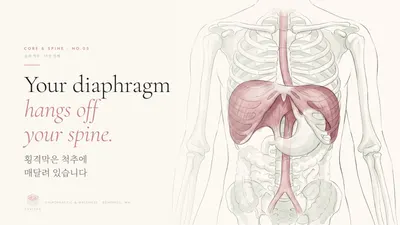
The door at the bottom of the food pipe is closed by two things: a ring in the pipe wall and the diaphragm wrapped around it at about T10. The vagus nerve, which slows the heart and runs digestion, passes through the same door. The diaphragm hangs off the spine, so a stiff mid-back and a shallow breath leave that outer squeeze working less.
식도 아래 문은 식도 벽의 고리 근육과, T10 언저리에서 그 바깥을 감싼 횡격막이 함께 닫아 줘요. 심장 박동을 늦추고 소화를 맡는 미주신경도 같은 문을 지나가요. 횡격막은 척추에 매달려 있어서, 등 한가운데가 굳고 숨이 얕으면 바깥에서 조여 주는 힘이 약해져요.

You already know how the night goes. A late dinner, or a big one. You lie down, and within the hour a sour warmth climbs up behind your breastbone. You prop up another pillow and wait for it to settle.
어떤 밤인지 잘 아실 거예요. 늦은 저녁, 혹은 조금 과했던 식사. 누우면 한 시간도 안 돼서 명치 뒤로 시큼하고 뜨거운 게 올라와요. 베개를 하나 더 받치고 가라앉기를 기다리죠.
"It's my stomach. Why are you looking at my back?" We hear it often. In this series we've followed one muscle, your diaphragm, from the front of your spine to the openings that pass through it. Last time it was T8, the opening your leg veins depend on. This time it's T10, the opening your food goes through, and one very important nerve with it.
"속이 문제인데 왜 등을 보세요?" 진료실에서 자주 듣는 말이에요. 이 시리즈에서는 횡격막(diaphragm)이라는 근육 하나를 따라가고 있어요. 척추 앞면에 붙은 자리에서부터, 그 근육을 뚫고 지나가는 통로들까지요. 지난번에는 다리 정맥이 지나가는 T8을 봤고, 이번에는 음식과 신경 하나가 함께 지나가는 T10이에요.
Earlier in the series: Heavy legs by evening? Look at T8
One door, two locks
식도 아래 문을 닫는 두 가지
Your food pipe, the esophagus, runs down through your chest and passes into the abdomen through a slit in the diaphragm. That slit, the esophageal hiatus, sits at about the level of your tenth thoracic vertebra, T10.
음식이 내려가는 관, 식도(esophagus)는 가슴을 지나 횡격막에 난 틈으로 배 안에 들어가요. 그 틈을 식도 열공(esophageal hiatus)이라고 하고, 높이로 치면 열 번째 등뼈, T10 언저리예요.
Two things keep that door shut after food goes through. Inside, a ring of muscle in the wall of the esophagus itself, the lower esophageal sphincter. Outside, the diaphragm. Its two long tendons, the crura, come up from the front of the spine and wrap around the esophagus like the two arms of a sling. When the diaphragm tightens, the sling tightens too.
음식이 지나간 뒤 그 문을 닫아 두는 건 두 가지예요. 안쪽에는 식도 벽에 있는 고리 근육, 하부식도괄약근(lower esophageal sphincter)이 있어요. 바깥쪽에는 횡격막이 있어요. 횡격막의 긴 힘줄 두 가닥, 크루스(crura)가 척추 앞면에서 올라와 식도를 양쪽에서 감싸 쥐고 있어요. 횡격막이 조이면 그 손아귀도 같이 조여져요.
That outer squeeze is measurable. In healthy volunteers, the pressure at the bottom of the esophagus rose sharply with a deep breath in and fell when the diaphragm relaxed. Every full breath gives the door a firmer squeeze from the outside.
바깥에서 조이는 이 힘은 실제로 재 볼 수 있어요. 건강한 사람들을 재 보니, 숨을 깊이 들이쉴 때 식도 아래쪽 압력이 확 올라가고 횡격막이 풀리면 다시 내려갔어요. 숨을 깊게 쉴 때마다 문이 바깥에서 한 번 더 단단히 조여지는 거예요.
The nerve that goes through the same door
같은 문을 지나가는 신경, 미주신경
The esophagus doesn't go through that door alone. Two cords of nerve ride down on it, one in front and one behind, and pass through the same opening at T10. Together they are the vagus nerve.
식도가 그 문을 혼자 지나가는 건 아니에요. 신경 두 가닥이 식도 앞뒤에 붙어 함께 내려와서, T10 그 구멍을 같이 지나가요. 이 두 가닥이 미주신경(vagus nerve)이에요.
The vagus starts in the brainstem, just under the brain at the base of the skull. It leaves the skull through a small opening beside the ear and runs down the neck next to the big artery. On the way it sends branches to the throat and the voice box, wraps around the heart and lungs, then follows the esophagus down through the diaphragm. Below it, it reaches the stomach, liver, pancreas, small intestine and most of the large intestine. No other nerve from the head travels nearly as far.
미주신경은 뇌 바로 아래, 머리뼈 밑동에 있는 뇌줄기에서 시작해요. 귀 옆의 작은 구멍으로 머리뼈를 빠져나와서, 목을 지나는 큰 동맥 옆을 따라 내려가요. 내려가는 길에 목구멍과 목소리를 내는 후두에 가지를 내주고, 심장과 폐를 감싸고, 식도를 따라 횡격막을 지나요. 횡격막 아래로는 위와 간, 췌장, 작은창자, 그리고 큰창자 대부분까지 닿아요. 머리에서 나오는 신경 가운데 이렇게 멀리까지 내려가는 건 미주신경 하나뿐이에요.
Why this one nerve matters
이 신경 하나가 왜 그렇게 중요할까요
Think of it as the body's brake. It keeps the resting heart slow and steady. It tells the stomach to make acid and start squeezing, it lets you swallow and speak, and after a meal it helps the gut move food along. When it works well you never notice it. You notice it when it doesn't.
한마디로 하면 몸의 브레이크예요. 쉬고 있을 때 심장이 천천히, 고르게 뛰도록 잡아 줘요. 위에 산을 만들고 움직이라고 신호를 보내고, 삼키고 말할 수 있게 해 주고, 밥을 먹은 뒤에는 장이 음식을 밀어 보내도록 도와요. 제대로 일할 때는 있는지도 모르고 지내요. 탈이 나야 비로소 느껴지죠.
Because one nerve does so much, trouble with it rarely shows up in just one place. When its signal is weak or out of step, people tell us about digestion that feels slow, a stomach that stays full long after a small meal, bloating, a lump in the throat or a change in the voice, a heart that races while they sit still, and nights when the body never quite switches off. Each of these can have other causes, which is why we ask about all of them together, not one at a time.
신경 하나가 이렇게 많은 일을 맡고 있다 보니, 탈이 나도 한 군데에서만 티가 나지 않아요. 미주신경 신호가 약해지거나 엇박자가 나면, 환자분들은 이런 이야기를 하세요. 소화가 더딘 것 같다, 조금만 먹어도 한참 동안 배가 부르다, 속이 자주 더부룩하다, 목에 뭐가 걸린 것 같거나 목소리가 달라졌다, 가만히 앉아 있는데 심장이 빨리 뛴다, 밤이 돼도 몸이 좀처럼 안 풀린다. 하나하나는 다른 이유에서 올 수도 있어요. 그래서 저희는 이 이야기들을 따로따로 듣지 않고 한꺼번에 여쭤봐요.
When the brake slams on: vasovagal syncope
브레이크가 너무 세게 걸릴 때, 미주신경성 실신
The brake can also slam on too hard. That is vasovagal syncope, the most common kind of fainting. Standing a long time in a warm room, the sight of blood, sudden pain, a long day without enough food or water. The vagus overreacts. The heart slows, the blood vessels in the legs widen, blood pressure drops, and the brain is short of blood for a few seconds. Most people feel it coming: warmth in the face, nausea, sweat, sounds going far away, vision closing in at the edges. Then they go down. Lying flat with the legs raised usually brings people round within a minute or so.
반대로 브레이크가 너무 세게 걸릴 때도 있어요. 이게 미주신경성 실신(vasovagal syncope)이에요. 사람이 쓰러지는 경우 가운데 가장 흔해요. 더운 곳에 오래 서 있을 때, 피를 봤을 때, 갑자기 아플 때, 하루 종일 제대로 먹지도 마시지도 못했을 때 잘 생겨요. 미주신경이 지나치게 반응하면 심장이 느려지고 다리 쪽 혈관이 확 넓어지면서 혈압이 뚝 떨어져요. 그 몇 초 동안 뇌로 가는 피가 모자라는 거예요. 대부분은 오는 게 느껴져요. 얼굴이 화끈거리고, 속이 메슥거리고, 식은땀이 나고, 소리가 멀어지고, 눈앞이 가장자리부터 좁아져요. 그러고는 주저앉게 되죠. 바닥에 눕혀 다리를 올려 주면 보통 1분 안팎이면 정신이 돌아와요.
If you feel it coming, don't try to ride it out standing. Sit or lie down right away. Cross your legs, squeeze your thighs and make tight fists until it passes.
그런 느낌이 오면 서서 버티려고 하지 마세요. 바로 앉거나 누우세요. 다리를 꼬고 허벅지에 힘을 꽉 주고, 주먹을 세게 쥔 채 지나갈 때까지 기다리면 돼요.
The one way in is your breath
미주신경에 닿는 길은 숨이에요
No one can adjust a nerve, and we won't tell you we do. But there is one way to reach the vagus that you can use yourself: a slow breath with a long breath out. Across many studies, slow breathing raised the part of the heart rhythm that the vagus controls, both during practice and after it. A slow, low breath is a diaphragm breath, and the diaphragm is the very muscle the vagus passes through at T10. That is one more reason the frame the diaphragm hangs from matters.
신경을 손으로 교정할 수는 없어요. 저희도 그렇게 말씀드리지 않아요. 다만 미주신경에 닿는 길이 하나 있는데, 이건 누구나 혼자서 쓸 수 있어요. 숨을 천천히 쉬면서 내쉬는 숨을 길게 하는 거예요. 여러 연구에서 천천히 숨을 쉬는 동안에도, 연습을 마친 뒤에도 심장 박동을 고르는 데 미주신경이 하는 몫이 커졌어요. 천천히 아래로 쉬는 숨은 곧 횡격막으로 쉬는 숨이에요. 그리고 횡격막은 미주신경이 T10에서 지나가는 바로 그 근육이죠. 횡격막이 매달린 틀이 중요한 이유가 하나 더 생기는 셈이에요.
Read with: Why can't I switch off, even when I lie down? · 누워 있어도 왜 몸이 안 풀릴까요?
The diaphragm hangs off your spine
그 문을 조이는 근육은 척추에 매달려 있어요
A muscle can only work as well as the frame it hangs from. The diaphragm wraps the inside of the lower ribs, and the crura fasten it to the front of the spine where the mid-back meets the low back. The ribs it pulls on hinge on the mid-back, segment by segment.
근육은 매달린 틀만큼만 일해요. 횡격막은 아래 갈비뼈 안쪽을 감싸고, 크루스가 등과 허리가 만나는 자리의 척추 앞면에 붙들어 매요. 횡격막이 당기는 갈비뼈는 등 한가운데 척추 마디마디에 걸려 있고요.
After years of sitting forward, a few of those segments stiffen and the ribs attached there stop swinging. Breathing climbs into the neck and upper chest, short and shallow. The diaphragm barely travels, so the sling around the door rarely gets its full squeeze, and the slow breath that reaches the vagus rarely happens.
몇 년을 앞으로 숙여 앉아 지내면 그 마디 몇 개가 굳고, 거기 붙은 갈비뼈가 잘 움직이지 않아요. 숨은 목과 윗가슴으로 올라가 짧고 얕아지고요. 횡격막이 거의 내려가지 않으니, 문을 감싼 손아귀도 제대로 조여질 일이 드물어요.
There's a second push from below. A slumped trunk after a big meal squeezes the belly, and the pressure inside it rises. That pressure pushes up on the very door the two locks are trying to hold shut.
아래에서 미는 힘도 하나 더 있어요. 배부르게 먹고 구부정하게 앉아 있으면 배가 눌리고 배 속 압력이 올라가요. 그 압력이, 안팎에서 애써 닫아 둔 바로 그 문을 아래에서 밀어 올려요.
It's the same container we described in our gravity series: the diaphragm is the lid, the pelvic floor the base. A lid that barely moves can't hold the pressure inside, so it pushes the wrong way, up toward the chest, instead of bracing the spine and the hips.
중력 시리즈에서 말씀드린 그 통이에요. 뚜껑이 횡격막, 바닥이 골반저(pelvic floor)예요. 뚜껑이 거의 안 움직이면 통 안의 압력을 붙잡지 못해요. 그 압력이 척추와 고관절을 받쳐 주는 대신 엉뚱하게 가슴 쪽으로 밀고 올라가는 거예요.
Read with: The Spine Under Gravity, Part Two: Pressure, and What to Do · 중력 아래의 척추 2부, 압력 그리고 할 일
Read with: Your diaphragm hangs off your spine · 횡격막은 척추에 매달려 있습니다
This is where chiropractic care does its work
카이로프랙틱이 일하는 자리가 바로 여기예요
In chiropractic terms, those stiff levels are segments that have stopped doing their share. We find them by hand, one at a time, and adjust them so the lower ribs get their hinge back. Then we work the soft tissue along the lower ribs and the diaphragm itself, so the muscle can travel its full distance again.
카이로프랙틱으로 보면, 굳은 마디는 제 몫을 못 하고 있는 마디예요. 저희는 그 마디를 손으로 한 마디씩 찾아 교정해서 아래 갈비뼈가 다시 경첩처럼 움직이게 해요. 그다음 아래 갈비뼈를 따라 붙은 연부조직과 횡격막 자체를 풀어서, 근육이 끝까지 내려갈 수 있게 해요.
Hands-on research backs this up. In randomized trials with healthy adults, manual work around the diaphragm and lower ribs let the rib cage open about two and a half centimeters more than a sham treatment, and on ultrasound the diaphragm travelled further with each breath. A frame that moves lets the diaphragm work the way it was built to, around your legs' vein at T8 and around your food pipe at T10.
손으로 하는 치료 연구도 이걸 뒷받침해요. 건강한 성인을 대상으로 한 무작위 연구에서, 횡격막과 아래 갈비뼈 주변을 손으로 풀어 준 쪽이 가짜 치료보다 갈비뼈가 약 2.5cm 더 벌어졌고, 초음파로 보니 숨 쉴 때마다 횡격막도 더 깊이 내려갔어요. 틀이 움직이면 횡격막은 원래 만들어진 대로 일해요. T8에서는 다리 정맥 둘레에서, T10에서는 식도 둘레에서요.
What a visit at Levitas looks like
Levitas에서는 이렇게 봐요
We take our time. We ask when the burning comes, what you ate, how soon you lay down, and what you already take for it. We watch you breathe sitting and lying down, and see whether the lower ribs widen or only the chest rises. Then we check the mid-back and lower ribs by hand, segment by segment.
저희는 서두르지 않아요. 언제 쓰린지, 무엇을 드셨는지, 먹고 얼마 만에 누우셨는지, 이미 드시는 약이 있는지 여쭤봐요. 앉아서, 누워서 숨 쉬는 모습을 보고, 아래 갈비뼈가 벌어지는지 가슴만 들리는지 확인해요. 그다음 등 한가운데와 아래 갈비뼈를 손으로 한 마디씩 짚어 봐요.
Then the work runs in order. If something hurts, we get that down first, because nothing else holds while it's loud. Then we restore motion: the stiff segments and their ribs, then the diaphragm. Then we teach the pattern, a low breath that fills the container and lets the outer lock squeeze. Then we load it, keeping that breath while you sit at a desk, bend and lift, so the change belongs to you. Last comes keeping what was rebuilt, a few minutes a day at home.
그다음은 순서대로 가요. 아픈 데가 있으면 그것부터 내려요. 통증이 큰 동안에는 뭘 해도 붙지 않거든요. 그다음 움직임을 돌려줘요. 굳은 마디와 거기 붙은 갈비뼈, 그다음 횡격막이요. 그리고 패턴을 가르쳐요. 통을 채우고 바깥에서 문을 조여 줄 수 있게, 아래로 천천히 쉬는 숨이에요. 그다음 부하를 실어요. 책상에 앉을 때, 숙일 때, 들 때도 그 숨을 지키게요. 그래야 변화가 환자분 것이 돼요. 마지막은 그렇게 되찾은 걸 집에서 하루 몇 분씩 지키는 일이에요.
Who comes in for this
이런 분들이 오세요
People who eat dinner late after a long commute and go to bed soon after. Remote workers who sit folded over a laptop from morning to night. Parents who finish the kids' dinner, then eat standing at the counter. Anyone who has already cut out coffee and spicy food, propped up the pillows, and still wakes with that sour warmth.
긴 퇴근길 끝에 늦게 저녁을 먹고 곧 잠자리에 드는 분. 아침부터 밤까지 노트북 앞에 몸을 접고 앉아 있는 재택근무자. 아이들 저녁을 챙긴 뒤 조리대 앞에 서서 대충 드시는 부모님. 그리고 커피와 매운 음식을 줄이고 베개도 높였는데, 여전히 시큼한 열기에 잠을 깨는 분이요.
What we'll have you do tonight
오늘 밤 해 보실 것
Give dinner time. Finish eating two to three hours before you lie down.
저녁에 시간을 주세요. 눕기 두세 시간 전에는 식사를 마치세요.
Raise the head of the bed, not just your head. Blocks under the bedposts or a wedge lift the whole trunk. Extra pillows bend you at the waist and press on the belly.
머리만이 아니라 침대 머리 쪽을 올리세요. 침대 다리 밑에 받침을 대거나 쐐기 베개를 쓰면 몸통 전체가 올라가요. 베개만 겹치면 허리가 접혀서 배가 눌려요.
Breathe low after dinner. Sit tall or lie back on a slope, one hand on your chest, one on your belly. Breathe in through your nose and let the lower hand and the lower ribs move first. Breathe out a little longer than you breathe in, about four counts in and six out. That long breath out is the part that reaches the vagus. Five minutes is enough.
저녁 먹고 아래로 숨 쉬기. 허리를 펴고 앉거나 비스듬히 기대어, 한 손은 가슴에, 한 손은 배에 얹어요. 코로 들이쉬면서 아래쪽 손과 아래 갈비뼈가 먼저 움직이게 해요. 내쉴 때는 들이쉰 것보다 조금 더 길게요. 넷을 세며 들이쉬고 여섯을 세며 내쉬는 정도면 돼요. 길게 내쉬는 그 숨이 미주신경에 닿는 부분이에요. 5분이면 충분해요.
If the lower hand won't move no matter what you try, that's the frame talking. That's the part we look at.
아무리 해도 아래쪽 손이 안 움직인다면, 틀이 굳어 있다는 신호예요. 바로 그 부분을 저희가 봐요.
Before anything else, we check
무엇보다 먼저, 확인부터 해요
Your first visit starts with questions before any treatment. Burning in the chest can come from somewhere other than the stomach, and the two can feel alike. Is it tied to meals and lying down, or to effort? Does it spread to the arm, jaw or back, or come with sweating or shortness of breath? Is swallowing hard, or has weight dropped without trying? If you've fainted, we ask when, how long you'd been standing, and what you felt just before. A faint during exercise or while lying down, or one that comes with a pounding or skipping heartbeat, doesn't fit the common pattern. The common kind follows meals and lying down. Anything that doesn't fit that pattern needs a different plan, and we'll tell you so plainly. And whatever you take for it, keep taking it. We never ask you to change a prescription.
첫 방문은 치료보다 질문부터 해요. 가슴이 쓰린 건 위가 아닌 다른 데서 올 수도 있고, 느낌이 비슷할 수 있거든요. 식사와 눕는 것과 관련 있는지, 아니면 힘을 쓸 때 오는지. 팔이나 턱, 등으로 뻗치는지, 식은땀이 나거나 숨이 차는지. 삼키기 힘들거나 일부러 빼지 않았는데 체중이 줄었는지요. 쓰러진 적이 있으시면 언제였는지, 얼마나 서 있다가 그랬는지, 쓰러지기 직전에 어떤 느낌이었는지도 여쭤봐요. 운동하다가, 혹은 누워 있다가 쓰러졌거나, 심장이 쿵쾅거리거나 건너뛰는 느낌이 같이 왔다면 흔한 경우와는 달라요. 흔한 경우는 식사 뒤, 누울 때 와요. 그 모양과 맞지 않으면 계획이 달라져야 하고, 그럴 땐 분명하게 말씀드려요. 그리고 드시던 약은 그대로 드세요. 저희는 처방을 바꾸라고 하지 않아요.
A note before you go
마지막으로
Heartburn rarely gets anyone's full attention. You learn to eat earlier, skip the coffee, sleep a little propped up. Life gets arranged around it, one evening at a time. You don't have to keep doing that. Come in and let us look at the frame your diaphragm hangs from, from the lower ribs to the segment at T10.
속쓰림은 대개 대수롭지 않게 넘기게 돼요. 저녁을 일찍 먹고, 커피를 빼고, 조금 기대어 자는 법을 배우죠. 그렇게 하루하루 생활을 거기에 맞춰 가요. 계속 그렇게 하실 필요는 없어요. 한번 들러 주세요. 아래 갈비뼈부터 T10 마디까지, 횡격막이 매달린 틀을 함께 볼게요.
Thanks for reading. Questions are welcome by phone or email. We answer every one.
읽어 주셔서 고마워요. 궁금한 건 전화나 이메일로 편하게 물어보세요. 하나하나 답해 드려요.
View the full brochure · 브로셔 전체 보기