Quick answer · 짧은 답
The scan came back clean but the knee still gives out. Here's why your body switches a muscle off after an injury, and what actually turns it back on.
다친 곳은 다 나았다는데 계단에서 무릎이 풀리고 팔이 무겁다면, 근육이 망가진 게 아니라 몸이 일부러 힘을 낮춰둔 것일 수 있습니다. 관절 센서가 근육을 끄는 이유와 다시 켜는 방법을 설명합니다.
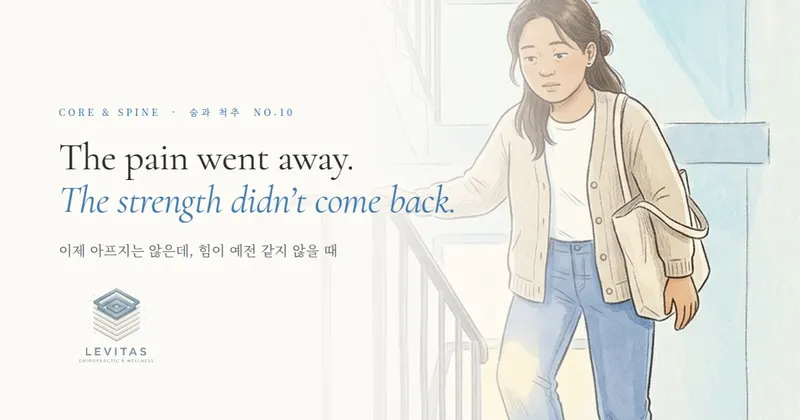
The pain went away. The strength didn't come back.
이제 아프지는 않은데, 힘이 예전 같지 않을 때
There's one sentence I hear almost every week. "It doesn't really hurt anymore. But the leg still doesn't feel like mine."
진료실에서 거의 매주 듣는 말이 있어요. "이제 아프지는 않아요. 그런데 다리가 아직 제 다리 같지 않아요."
The story is usually the same. A twisted ankle, a bad landing, a night of sleeping wrong. The sharp pain settles down in a week or two, the scan comes back clean, and everyone says it healed. But the knee gives out on stairs. The shoulder feels heavy going overhead. Something's still off, and nobody has explained why.
이야기는 대체로 비슷해요. 발목을 접질렸거나, 착지를 잘못했거나, 자다가 목이 꺾였거나. 날카로운 통증은 일이 주면 가라앉고, 사진에도 이상이 없다고 나오고, 다들 다 나았다고 해요. 그런데 계단에서 무릎이 풀리고, 팔을 올릴 때 유난히 무거워요. 뭔가 남아 있는데 아무도 이유를 말해주지 않죠.
There's a reason, and it's a good one. Your muscle isn't damaged. It's being turned down on purpose, by your own body, because right now protecting you matters more than letting you push.
이유가 있어요. 듣고 나면 좀 안심되는 이유이기도 하고요. 근육이 망가진 게 아니거든요. 몸이 일부러 그 근육의 힘을 낮춰둔 거예요. 지금은 무리하게 쓰는 것보다 지키는 게 더 중요하다고 판단한 거죠.
Your joint is a room full of sensors
관절은 센서로 가득한 방이에요
Most of us picture a joint as two bones and a bit of cartilage. In truth it's packed with tiny sensors, sitting in the capsule that wraps the joint, in the ligaments, in the lining inside, and in the tendon where muscle meets bone. All day long they report back: where this joint is, how fast it's moving, how much weight it's carrying. Like a house with a smoke detector in every room. When everything's fine you forget they're there.
보통 관절 하면 뼈 두 개랑 연골 정도를 떠올리시죠. 실제로는 아주 작은 센서들이 빽빽하게 들어차 있어요. 관절을 감싸는 주머니에도, 인대에도, 관절 안쪽 막에도, 근육이 뼈에 붙는 힘줄에도요. 방마다 화재감지기가 달린 집 같은 거예요. 아무 일 없을 때는 있는 줄도 모르잖아요.
So the body flips a breaker
그래서 몸은 두꺼비집을 내려요
When a joint gets pushed past its safe range, those sensors stop reporting and start protecting. They turn down the muscles sitting right beside the injury. Not gently. All the way down. When too much current runs through a house, the breaker doesn't push harder. It cuts the line. Strength is graded from 5 down to 0, and a muscle beside a sprained joint can sit at a 3 or lower without a single fiber being torn.
관절이 안전한 범위를 넘어가면, 센서들은 보고를 멈추고 보호 모드로 들어가요. 다친 곳 바로 옆 근육들의 힘을 낮춥니다. 살짝이 아니라 확 내려요. 집에 과전류가 흐르면 차단기가 전기를 더 보내지 않고 그냥 끊어버리는 것처럼요. 근력은 5점부터 0점까지로 보는데, 삐끗한 관절 옆 근육은 근섬유가 하나도 안 찢어졌는데도 3점 이하로 내려가 있을 수 있어요.
Pain shows up late, and stays late
통증은 늦게 도착해서 늦게까지 남아요
Remember touching a hot pan as a kid. There was a small gap between touching it and feeling it, and by then the skin was already burned. The fibers that carry pain are the thinnest in the whole body, which makes them the slowest. They're slow to switch off too. When someone tells me it didn't hurt at the time but hurt terribly the next morning, that's not a fuzzy memory. That's exactly how the wiring works.
어릴 때 뜨거운 냄비 만졌던 순간 기억나세요? 손이 닿은 순간과 아픔이 느껴진 순간 사이에 짧은 틈이 있었고, 그때는 이미 데인 뒤였죠. 통증을 전달하는 신경은 몸에서 제일 가늘어서 제일 느려요. 꺼지는 것도 느리고요. "다칠 때는 안 아팠는데 다음 날 아침에 죽겠더라고요" 하시는 분들, 기억이 흐려서 그런 게 아니에요. 원래 그렇게 작동합니다.
And yes, your knee really does know the weather
무릎이 날씨를 안다는 말, 진짜예요
Some of those sensors are unusually sensitive to the pressure inside the joint. When a storm front moves in and the pressure outside drops, the pressure inside pushes outward against the lining, and it presses on the movement sensors and the pain sensors at the same time. Your mother isn't being dramatic. Her joint is doing precisely what it was built to do.
센서 중에는 관절 안쪽 압력에 유난히 예민한 것들이 있어요. 저기압이 다가와서 바깥 기압이 떨어지면, 관절 안쪽 압력이 상대적으로 바깥으로 밀리면서 안쪽 막을 눌러요. 이때 움직임 센서랑 통증 센서가 같이 자극받습니다. 어머니가 괜히 하시는 말씀이 아니에요.
Feeling better and being back are two different things
안 아픈 것과 돌아온 것은 다른 이야기예요
Pain usually leaves first. The muscle that got switched off can stay switched off after the pain is gone, especially in the knee, shoulder and ankle. Meanwhile other muscles quietly pick up the work. From the outside the movement looks fine. But the load has moved somewhere it doesn't belong, and months or years later that neighbouring area is the one that starts complaining. It's why so many people end up with a problem that seems to have nothing at all to do with the injury they had years ago.
통증이 먼저 떠나요. 꺼져 있던 근육은 통증이 사라진 뒤에도 계속 꺼져 있을 수 있고요. 특히 무릎이나 어깨, 발목에서 그래요. 그동안 다른 근육들이 조용히 그 일을 대신 맡습니다. 겉으로는 멀쩡해 보여요. 그런데 부담은 원래 자리가 아닌 곳으로 옮겨갔고, 몇 달 몇 년 뒤에 그 옆자리가 아프기 시작해요. 몇 년 전에 다친 곳이랑 상관없어 보이는 데가 아파지는 이유가 여기 있어요.
The muscle didn't get stronger. The brake came off.
근육이 세진 게 아니에요. 브레이크가 풀린 거예요.
When a joint gets its proper movement back, the protective signal stops. Strength that seemed to have vanished can show up again right away, because it was never gone. It was being held back.
관절이 제 움직임을 되찾으면 보호하려던 신호가 멈춰요. 사라진 줄 알았던 힘이 바로 돌아오기도 합니다. 없어진 게 아니라 붙잡혀 있었을 뿐이니까요.
The spine is where it starts. It's not where it ends.
척추에서 시작하지만, 척추에서 끝나지 않아요
A nerve leaving the spine can quietly turn down a muscle in your arm or your leg. If we test that muscle before the spine is clear, we're measuring the wrong thing, and we'll end up treating the wrong place. So we check the spine first, every time.
척추에서 나가는 신경이 팔이나 다리의 근육을 조용히 낮춰놓는 일이 있어요. 척추를 정리하지 않은 채로 그 근육의 힘을 재면 사실은 엉뚱한 걸 재고 있는 겁니다. 그러면 엉뚱한 데를 치료하게 되고요. 그래서 척추부터 봅니다. 예외 없이요.
But the limb joints matter just as much. The knee, shoulder, ankle and wrist carry sensors that can hold a shut-off signal long after the pain is gone. The spine doesn't carry that particular kind, and that's the practical difference. In the spine the brake usually lets go along with the pain. In a limb joint it can stay on for years. So we look at both. Work on the spine alone and you only ever see half of it.
그런데 사지 관절도 그만큼 중요해요. 무릎, 어깨, 발목, 손목에는 통증이 사라진 뒤에도 차단 신호를 오래 붙잡고 있는 센서가 있습니다. 척추에는 그 종류가 없고요. 실제로 차이가 갈리는 지점이 여기예요. 척추는 통증이 풀리면 브레이크도 같이 풀리는 편인데, 사지 관절은 몇 년씩 그대로 걸려 있을 수 있고요. 그래서 척추랑 사지 관절을 같이 봅니다. 척추만 만지고 끝내면 절반만 보고 끝내는 셈이거든요.
Hands open the door. Movement keeps it open.
손이 문을 열고, 움직임이 그 문을 잡아둡니다
An adjustment releases the brake, and that part can happen faster than people expect. But your body has been moving around that joint for weeks or months, and the guarded pattern it built doesn't disappear on its own. Something better has to take its place.
교정은 브레이크를 풀어줍니다. 이건 생각보다 빨리 일어나요. 그런데 몸은 그동안 그 관절을 피해서 움직이는 법을 익혀놨어요. 그 조심스러운 패턴은 저절로 사라지지 않아요. 더 나은 움직임으로 다시 익혀야 합니다.
That's what the movement work is for. Simple loaded movement, done properly, tells the nervous system the joint is safe to use again and turns the strength that was being held back into strength you can actually use. Hands and movement aren't two separate services. They're one process, and leaving either one out is usually why the same problem keeps coming back.
운동 치료가 하는 일이 바로 그거예요. 단순한 동작을 제대로 하는 것만으로도 신경계는 이 관절을 다시 써도 된다고 배우고, 붙잡혀 있던 힘이 실제로 쓸 수 있는 근력으로 올라옵니다. 손으로 하는 것과 움직임은 따로 파는 두 가지가 아니에요. 하나의 과정이고, 둘 중 하나를 빼면 같은 문제가 다시 돌아옵니다.
What actually happens when you come in
오시면 실제로 이런 순서로 진행됩니다
We listen to the whole story. 언제부터, 어떻게 시작됐는지 끝까지 듣습니다.
We test the strength and the movement. 지금 힘이 어디까지 나오는지 먼저 기록합니다.
We work the spine first, then the limb joint. 척추를 먼저 정리하고, 그다음 무릎이나 어깨를 봅니다.
We test the same thing again, in front of you. 아까 잰 그 힘을, 보시는 앞에서 다시 잽니다.
You leave with movement that holds it. 그 상태를 지켜줄 움직임을 가지고 돌아가십니다.
Step four is the one most people have never had. It's also the one that tells us honestly whether we were right. If the strength comes back in front of you, we found it. If it doesn't, we say so, and we keep looking.
4번을 경험해보신 분이 의외로 적어요. 그리고 이 단계가 저희 판단이 맞았는지 아닌지를 솔직하게 알려줘요. 눈앞에서 힘이 돌아오면 원인을 제대로 찾은 거고요. 안 돌아오면 안 돌아왔다고 그대로 말씀드리고, 다른 원인을 찾습니다.
Three things you can try starting today
오늘부터 해보실 수 있는 세 가지
1. Move it gently, and move it often.
아프지 않은 범위 안에서 자주 움직여 주세요. 그 움직임이 뇌로 돌아가는 정보가 됩니다. 완전히 쉬는 건 오히려 반대 신호를 보냅니다.
2. Don't chase the tight spot with stretching alone.
뭉친 데만 계속 늘리지 마세요. 뻣뻣한 근육은 제 몫을 못 하는 관절 대신 야근하고 있는 경우가 많아요. 더 세게 늘리면 몸은 헐거워지기만 하고 힘은 그대로입니다.
3. Check the strength, restore the joint, then check again.
힘을 먼저 재보고, 관절을 회복시킨 다음, 같은 힘을 다시 재보는 거예요. 힘이 돌아오면 원인은 관절이었던 겁니다.
Your body isn't letting you down. It's protecting you a little too carefully, for a little too long. Our job is just to let it know the danger has passed.
몸이 잘못되고 있는 게 아니에요. 조금 지나치게, 조금 오래 지키고 있을 뿐이죠. 저희가 하는 일은 이제 위험은 지나갔다고 몸한테 알려주는 것뿐이고요.
If the pain has gone but the strength hasn't, that's worth looking at.
통증은 사라졌는데 힘이 안 돌아왔다면, 한 번 확인해 볼 만합니다.
Book a visit · 예약하기
Kilbo Yun, D.C. · Doctor of Chiropractic
View the full brochure · 브로셔 전체 보기