 See it all as a brochure그림으로 한눈에 보는 브로셔 · 눌러서 보기
Quick answer · 짧은 답
Two routes carry fluid and waste out of your legs: the veins, which take blood back to the heart, and the lymph, which collects the fluid, proteins and debris left in the tissues and returns them to the blood. In the legs, neither route has a strong pump of its own. Your muscles do the pumping. Every time the calf contracts, it squeezes the deep veins and pushes blood upward, and one-way valves stop it from falling back. The smallest lymph vessels have no muscle at all and fill and empty as the tissue around them moves. Sitting or standing still stops both: in healthy adults, fifteen minutes of standing still added about 63 mL to each lower leg. Working muscle cleared lymph three to six times faster than resting muscle, and active ankle movements raised venous flow the most. Strength training works at any age, including in people in their nineties.
다리에서 물과 찌꺼기를 실어 내는 길은 두 가지예요. 피를 심장으로 돌려보내는 정맥, 그리고 조직에 남은 물과 단백질, 찌꺼기를 모아 다시 핏속으로 보내는 림프예요. 다리에서는 두 길 모두 스스로 미는 힘이 약해서, 근육이 펌프 노릇을 해요. 종아리가 수축할 때마다 깊은 정맥을 짜서 피를 위로 밀고, 한쪽으로만 열리는 판막이 다시 내려가지 않게 막아요. 가장 가는 림프관에는 근육이 아예 없어서, 둘레 조직이 움직일 때마다 채워지고 비워져요. 앉거나 가만히 서 있으면 둘 다 멈춰요. 건강한 성인이 15분 가만히 서 있기만 해도 종아리 부피가 약 63mL 늘었어요. 일하는 근육에서는 림프가 쉴 때보다 3~6배 빨리 빠져나갔고, 스스로 발목을 움직일 때 정맥 흐름이 가장 크게 올랐어요. 근력운동은 90대에서도 효과가 있어요.
Today's question · 오늘의 질문
When you sit most of the day, where do the used blood and leftover fluid in your legs go?
하루 종일 앉아 있으면, 다리에서 할 일을 마친 피와 물은 어디로 갈까요?
In Lecture 2 we followed the messages working muscle sends into the blood. Today we follow what has to come back out. Your heart pushes blood all the way down to your toes. Everything your legs need to get rid of, the blood that has dropped off its oxygen and nutrients, the fluid that has leaked out of the vessels, the proteins and debris left behind, has to travel back up, against gravity, from more than a metre below the heart. Two routes carry it: the veins and the lymph. In the legs, neither has a strong pump of its own. Your muscles are the pump.
2강에서는 일하는 근육이 핏속으로 보내는 신호를 따라가 봤어요. 오늘은 다시 빠져나와야 하는 것들을 따라가 봐요. 심장은 피를 발끝까지 내려보내요. 그런데 다리가 내보내야 하는 것들, 산소와 영양소를 내려놓은 피, 혈관 밖으로 새어 나온 물, 남은 단백질과 찌꺼기는 모두 심장보다 1미터 넘게 아래에서 중력을 거슬러 올라가야 해요. 그 길이 두 가지, 정맥과 림프예요. 다리에서는 둘 다 스스로 미는 힘이 약해요. 그 펌프가 근육이에요.
A familiar story · 진료실에서 자주 만나는 이야기 (example · 예시 인물)
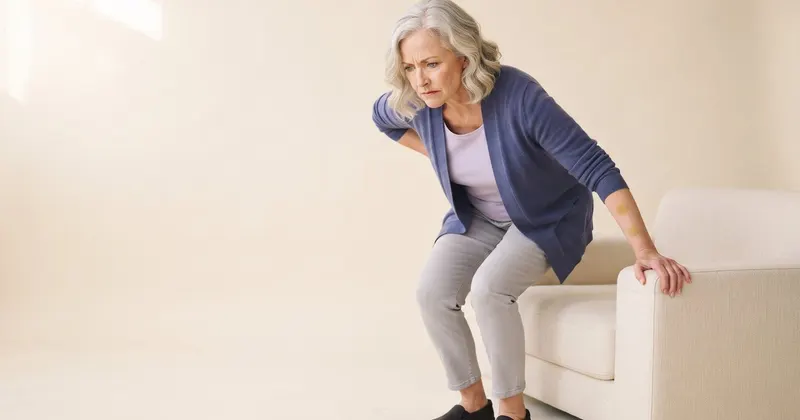
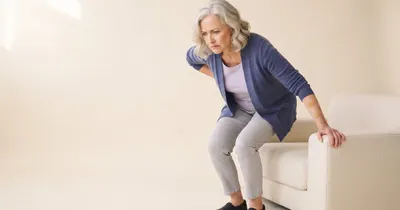
Linda is in her mid-sixties. Her low back has hurt badly for years, so most days she sits: the kitchen chair, the car, the sofa in the evening. She gave up on exercise a long time ago. "At my age it's too late, and with this back I can't anyway." By evening her ankles are puffy and her shoes feel tight. She bruises easily, and the marks on her shins seem to stay for a long time.
린다 씨는 60대 중반이에요. 허리가 몇 년째 심하게 아파서 하루 대부분을 앉아 지내요. 부엌 의자, 차 안, 저녁엔 소파요. 운동은 오래전에 포기했어요. "이 나이에 이미 늦었고, 이 허리로는 어차피 못 해요." 저녁이 되면 발목이 붓고 신발이 꽉 껴요. 멍이 잘 들고, 정강이 멍이 오래 남는 것 같아요.
By the end, you'll know · 오늘 알게 되실 것
- What the veins and the lymph each carry out of your legs · 정맥과 림프가 각각 다리에서 무엇을 실어 내는지
- How the calf pump works, in three steps · 종아리 펌프가 돌아가는 세 단계
- Why sitting and standing still both stop the flow · 앉아 있어도, 가만히 서 있어도 흐름이 멈추는 이유
- Why the ankle and a full movement decide how hard the pump works · 발목과 끝까지 움직이는 동작이 펌프의 세기를 정하는 이유
- Why it is never too late to restart it · 다시 돌리기에 너무 늦은 나이는 없는 이유
Two routes out
빠져나가는 길은 두 가지
Blood drops off oxygen and nutrients in the legs and heads home through the veins carrying carbon dioxide and waste. The fluid that leaks out of the vessels, with leftover proteins, white blood cells and debris, is collected by the lymph.
피는 산소와 영양소를 다리에 내려놓고, 대신 이산화탄소와 찌꺼기를 싣고 정맥으로 돌아가요. 혈관 밖으로 새어 나온 물은 남은 단백질, 백혈구, 부스러기와 함께 림프가 걷어 가요.
The veins take blood back to the heart, along with the carbon dioxide and waste the tissues have handed to it. Your legs have two sets. The superficial veins run just under the skin. The deep veins run inside the leg, right between the calf muscles, and carry most of the blood home. Inside the veins sit valves: thin pairs of flaps that open only toward the heart.
정맥은 조직이 넘겨준 이산화탄소와 찌꺼기를 싣고 피를 심장으로 돌려보내요. 다리 정맥은 두 갈래예요. 얕은 정맥은 피부 바로 아래를 지나고, 깊은 정맥은 다리 안쪽, 바로 종아리 근육 사이를 지나며 돌아가는 피의 대부분을 실어 날라요. 정맥 안에는 판막이 있어요. 심장 쪽으로만 열리는 얇은 문짝 두 장이에요.
The lymph is the second route. A little fluid leaks out of the smallest blood vessels into the tissues all day long, carrying proteins with it. Not all of it goes back into the blood directly. The rest, along with debris and immune cells, is collected by the lymph vessels and returned to the blood near the heart. The smallest lymph vessels, where this collection begins, have no muscle in their walls at all. They fill and empty only when the tissue around them is squeezed and released, by a working muscle, by a step, by a breath.
림프가 두 번째 길이에요. 가장 가는 혈관에서는 하루 종일 물이 조금씩 조직으로 새어 나오고, 단백질도 함께 나와요. 그 물이 다 바로 혈관으로 돌아가지는 않아요. 남은 물은 찌꺼기, 면역 세포와 함께 림프관이 모아서 심장 근처에서 다시 핏속으로 돌려보내요. 이 수거가 시작되는 가장 가는 림프관에는 벽에 근육이 아예 없어요. 둘레 조직이 눌렸다 풀릴 때만, 그러니까 근육이 일하고, 발을 딛고, 숨을 쉴 때만 채워지고 비워져요.
The calf pump, in three steps
종아리 펌프는 세 단계로 돌아가요
- Fill. When the calf relaxes, blood flows into the deep veins from below and from the surface veins.
- Squeeze. When the calf contracts, as it does with every step, it presses on the deep veins from all sides. The valves above open, and blood is pushed up toward the knee and thigh.
- Hold. When the calf relaxes again, the valves below close, so the blood that just moved up can't fall back. The veins fill again from below, ready for the next step.
- 채우기. 종아리가 풀려 있을 때, 피가 아래쪽과 얕은 정맥에서 깊은 정맥으로 흘러 들어와요.
- 짜기. 걸음마다 종아리가 수축하면 깊은 정맥을 사방에서 눌러요. 위쪽 판막이 열리고 피가 무릎과 허벅지 쪽으로 밀려 올라가요.
- 붙잡기. 종아리가 다시 풀리면 아래쪽 판막이 닫혀서, 방금 올라간 피가 다시 내려오지 못해요. 그동안 정맥은 아래에서 다시 차오르고 다음 걸음을 기다려요.
The sole of the foot adds a small pump of its own. A dense network of deep veins lies in the sole, and each time your weight comes onto the foot, that network is pressed empty into the calf veins above. Walking is when both pumps run together. That is why pressure in the veins at the ankle drops when you start walking, and climbs again when you stand still.
발바닥도 작은 펌프를 하나 더 돌려요. 발바닥 깊은 곳에는 정맥이 그물처럼 깔려 있어서, 체중이 발에 실릴 때마다 눌려 위쪽 종아리 정맥으로 비워져요. 두 펌프가 함께 도는 순간이 걷기예요. 그래서 걷기 시작하면 발목 정맥의 압력이 내려가고, 가만히 서면 다시 올라가요.
(The upper half of the trip, where your breathing draws blood up through the trunk, is in our earlier post, Heavy legs by evening.)
(숨이 몸통에서 피를 끌어올리는 위쪽 구간은 예전 글 저녁마다 다리가 무겁다면에 썼어요.)
In the lab: fifteen minutes of standing still
실험실: 15분 동안 가만히 서 있었더니
In 2022, a group in Germany asked fifteen healthy adults with no vein problems to stand still for fifteen minutes and measured their lower legs the whole time. On average each lower leg gained about 63 mL, roughly a quarter of a cup. At the same time, discomfort rose by about three and a half points on a ten-point scale, and so did the urge to move. In most of the participants, the more the leg swelled, the more uncomfortable it felt. The researchers called their paper Walking instead of standing.
2022년 독일의 한 연구팀이 정맥에 문제가 없는 건강한 성인 15명에게 15분 동안 가만히 서 있게 하고 종아리 부피를 계속 쟀어요. 종아리 한쪽에 평균 약 63mL가 늘었어요. 종이컵 3분의 1쯤이에요. 같은 시간 동안 불편감은 10점 만점에 약 3.5점 올랐고, 움직이고 싶은 마음도 그만큼 올랐어요. 참가자 대부분에서 다리가 많이 부을수록 더 불편했어요. 연구팀이 붙인 논문 제목은 *서 있지 말고, 걸으세요*였어요.
Sitting stops it too
앉아 있어도 멈춰요
In a seat, the knees and hips are bent and the calves barely move. In a Japanese study, forty healthy middle-aged adults sat in a reclining chair for two hours without getting up. Their calf muscles grew measurably stiffer, their calves grew larger around, and leg discomfort rose by the end. When they raised their legs afterward, the stiffness came down.
앉으면 무릎과 고관절이 굽고 종아리는 거의 움직이지 않아요. 일본의 한 연구에서 건강한 중년 40명이 두 시간 동안 일어나지 않고 등받이 의자에 앉아 있었어요. 종아리 근육이 측정할 수 있을 만큼 단단해졌고, 종아리 둘레가 늘었고, 끝날 때쯤 다리 불편감이 커졌어요. 그 뒤 다리를 올리자 단단함이 줄었어요.
Breaking up the sitting changes the picture. In a Canadian study, healthy young adults sat for four hours on two different days, once straight through and once with three minutes of exercise every hour. On the straight-through day the lower legs kept swelling and then stayed swollen. On the movement day the swelling stayed smaller, and a marker of inflammation in the saliva went down instead of up.
앉아 있는 시간을 중간중간 끊으면 그림이 달라져요. 캐나다의 한 연구에서 건강한 젊은 성인들이 서로 다른 두 날 네 시간씩 앉아 있었어요. 하루는 쭉 앉아 있었고, 하루는 한 시간에 한 번 3분씩 운동했어요. 쭉 앉은 날은 종아리가 계속 붓다가 부은 채로 머물렀어요. 움직인 날은 부기가 덜 생겼고, 침 속 염증 신호도 오르지 않고 오히려 내려갔어요.
So the answer to today's question: when you sit most of the day, the used blood and leftover fluid in your legs struggle to climb back up, and they build up in the legs. By evening, gravity has had a whole day to pull them down toward the ankles.
그래서 오늘 질문의 답은 이거예요. 하루 종일 앉아 있으면 다리에서 할 일을 마친 피와 물은 잘 올라가지 못하고 다리에 쌓여요. 저녁쯤이면 중력이 하루 종일 그것들을 발목 쪽으로 끌어내린 거예요.
For Linda · 린다 씨에게는 (example · 예시)
Linda's back pain makes sitting feel like the safe choice, so the hours add up: kitchen chair, car, sofa. Every one of those hours is an hour the calf pump isn't running. The puffy ankles at night are not a separate problem from the back. They are the same quiet day, seen from the feet.
린다 씨는 허리가 아파서 앉아 있는 게 안전하다고 느끼고, 그렇게 앉은 시간이 쌓여요. 부엌 의자, 차, 소파요. 그 한 시간 한 시간이 종아리 펌프가 쉬는 시간이에요. 저녁에 붓는 발목은 허리와 따로 떨어진 문제가 아니에요. 같은 조용한 하루를 발 쪽에서 본 모습이에요.
The lymph needs muscle even more
림프는 근육이 더 필요해요
Veins at least have a heart pushing from behind. The lymph doesn't. In 1997, researchers in Finland placed a tiny amount of a traceable protein inside the thigh muscles of eight men and watched with a gamma camera how fast it was carried away. At rest it barely moved: about 0.04% per minute. During ten minutes of leg exercise, it cleared three to six times faster.
정맥은 그래도 뒤에서 밀어 주는 심장이 있어요. 림프는 그것도 없어요. 1997년 핀란드의 연구팀이 남성 8명의 허벅지 근육 안에 추적할 수 있는 단백질을 아주 조금 넣고, 그게 얼마나 빨리 실려 나가는지 감마카메라로 지켜봤어요. 쉴 때는 거의 움직이지 않았어요. 1분에 약 0.04%였어요. 10분 동안 다리 운동을 하자 3배에서 6배 빨리 빠져나갔어요.
One detail matters for later. Tensing the thigh with the knee fully straight cleared more than tensing it with the knee bent at 90 degrees. The researchers concluded that working muscle pushes lymph best when it can shorten close to its full range. A big, complete movement does more than a small, partial one.
나중에 중요해질 대목이 하나 있어요. 무릎을 끝까지 편 채 허벅지에 힘을 줄 때가, 무릎을 90도로 굽힌 채 힘을 줄 때보다 더 많이 빠져나갔어요. 연구팀은 일하는 근육이 끝까지 짧아질 수 있을 때 림프를 가장 잘 민다고 결론 내렸어요. 작고 어중간한 움직임보다 크고 끝까지 가는 움직임이 더 많은 일을 해요.
A bruise is blood that has leaked into the tissues. Part of clearing it away, along with the proteins and debris that come with it, is the lymph's job. (We'll follow the lymph all the way to the heart in Lecture 4.)
멍은 조직으로 새어 나온 피예요. 그 피와 함께 남은 단백질, 찌꺼기를 치우는 일의 한 부분을 림프가 맡아요. (림프가 심장까지 가는 길은 4강에서 끝까지 따라가 봐요.)
For Linda · 린다 씨에게는 (example · 예시)
Linda bruises easily, and that gets checked first, on her first visit. Separately, her legs are doing their cleaning with the pump switched off most of the day. Muscle is the part of that cleaning she can switch back on.
린다 씨는 멍이 잘 들어요. 그건 첫 방문에서 저희가 먼저 확인해요. 그와 별개로, 린다 씨의 다리는 하루 대부분 펌프가 꺼진 채로 청소를 하고 있어요. 그 청소에서 린다 씨가 다시 켤 수 있는 부분이 근육이에요.
The ankle sets the size of the stroke
펌프의 크기는 발목이 정해요
A pump is only as strong as its stroke. The calf gets its full stroke when the ankle moves through its whole range: the foot lifting up toward the shin, then pressing down onto the toes. In 1999, researchers in Edinburgh watched the deep leg veins with ultrasound while twenty people moved their feet. Moving the foot and ankle in every direction yourself raised venous flow speed the most: about 38% on average and 58% at the peak. When someone else moved the same foot for them, the rise was smaller.
펌프의 힘은 한 번에 얼마나 크게 움직이느냐에 달려 있어요. 종아리는 발목이 끝까지 움직일 때 가장 크게 짜요. 발등을 정강이 쪽으로 들어 올렸다가, 까치발로 눌러 내려가는 그 범위 전체요. 1999년 에든버러의 연구팀이 20명이 발을 움직이는 동안 다리 깊은 정맥을 초음파로 지켜봤어요. 발목과 발을 모든 방향으로 스스로 움직였을 때 정맥 흐름 속도가 가장 크게 올랐어요. 평균 약 38%, 최고 순간에는 약 58%였어요. 같은 발을 남이 움직여 줬을 때는 덜 올랐어요.
Put the two labs together and the rule is the same for both routes: the muscle has to do the work itself, and the joint has to let it move all the way. A stiff ankle, a foot that has flattened and locked, a knee that never quite straightens, a low back that keeps the hips from extending when you walk: each one takes a little off every stroke, all day long.
두 실험을 합치면 두 길 모두에 같은 규칙이 나와요. 근육이 스스로 일해야 하고, 관절이 끝까지 움직이게 해 줘야 해요. 굳은 발목, 아치가 내려앉아 잠긴 발, 끝까지 펴지지 않는 무릎, 걸을 때 고관절이 뒤로 펴지지 못하게 붙잡는 허리. 하나하나가 하루 종일 펌프질 한 번 한 번을 조금씩 깎아요.
For Linda · 린다 씨에게는 (example · 예시)
When Linda walks, her back keeps her steps short and her hips barely open behind her. Her ankles hardly bend before the foot leaves the floor. Even on the days she does walk, each step is a half stroke.
린다 씨는 걸을 때 허리 때문에 보폭이 짧고, 고관절이 뒤로 거의 펴지지 않아요. 발이 바닥을 떠나기 전에 발목도 거의 굽혀지지 않고요. 걷는 날에도 걸음 하나하나가 반쪽짜리 펌프질이에요.
Clinical pearl · 진료실 노트 — How we see it at Levitas · Levitas에서는 이렇게 봐요
We look at the whole chain these pumps depend on: the low back that drives the stride, the hips, the knees, and the joints of the ankle and foot. Where a joint has stopped moving, we restore its motion with an adjustment, so the muscles get their full stroke back. Then we teach the movements that use it, starting where you are: seated ankle pumps, calf raises at the counter, short walks that grow longer. Movement first, then the pattern, then load.
저희는 이 펌프들이 기대는 사슬 전체를 봐요. 걸음을 밀어 주는 허리, 고관절, 무릎, 그리고 발목과 발의 관절까지요. 움직임을 멈춘 관절이 있으면 교정으로 움직임을 되찾아, 근육이 다시 끝까지 펌프질할 수 있게 해요. 그다음 그 움직임을 쓰는 동작을 지금 할 수 있는 데서부터 알려 드려요. 앉아서 하는 발목 펌프, 조리대를 잡고 하는 까치발, 조금씩 늘려 가는 짧은 걷기요. 움직임을 먼저, 그다음 패턴, 그다음 부하예요.
Linda's first visit · 린다 씨의 첫 방문 (example · 예시)
We start with what she's worried about: the back pain, how she bruises, and the swelling, one leg or both, and whether it goes down overnight. Those get checked first. Then we look at how she sits, stands up and walks, which segments of her low back and pelvis have stopped moving, and how far her hips and ankles go. Stiff joints get adjusted to restore their motion. Her plan starts in the chair she already sits in.
먼저 린다 씨가 걱정하는 것부터 봐요. 허리 통증, 멍이 드는 모양, 그리고 부기가 한쪽인지 양쪽인지, 자고 나면 빠지는지요. 이런 것들은 먼저 확인해요. 그다음 앉고, 일어나고, 걷는 모습을 보고, 허리와 골반의 어느 마디가 움직임을 멈췄는지, 고관절과 발목이 어디까지 움직이는지 봐요. 굳은 관절은 교정으로 움직임을 되찾아요. 계획은 지금 앉아 있는 그 의자에서 시작해요.
Try it · 실습: restart both pumps · 두 펌프 다시 돌리기
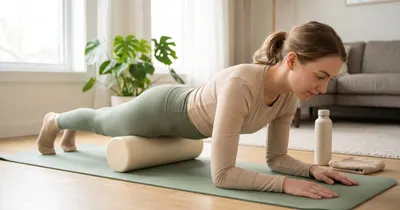
- Ankle pumps, seated. Feet flat. Lift your toes as high as they go, then lift your heels as high as they go. Twenty slow rounds, every time you sit down for a while.
- Calf raises at the counter. Hold the counter with both hands. Rise onto your toes ten times, slowly, all the way up and all the way down. Big and complete beats fast and small.
- Walk, don't stand. If you're waiting, for the kettle, for the phone call, take a few steps instead of standing still.
- Feet up in the evening. Lie down with your calves on a cushion for a few minutes, and keep doing slow ankle pumps.
- 앉아서 발목 펌프. 발바닥을 바닥에 두고, 발끝을 최대한 들었다가 뒤꿈치를 최대한 들어요. 한동안 앉을 때마다 천천히 20번.
- 조리대 잡고 까치발. 두 손으로 조리대를 잡고, 까치발을 10번, 천천히 끝까지 올라갔다 끝까지 내려와요. 빠르고 작게보다 크고 끝까지가 나아요.
- 서 있지 말고 걷기. 주전자 물이 끓기를 기다릴 때, 전화를 기다릴 때, 가만히 서 있지 말고 몇 걸음 걸어요.
- 저녁엔 다리 올리기. 누워서 종아리를 쿠션에 올리고 몇 분 쉬면서, 천천히 발목 펌프를 계속해요.
Linda's week · 린다 씨의 한 주 (example · 예시)
Every TV ad break: twenty ankle pumps. Every time the kettle goes on: ten calf raises at the counter. After lunch: a five-minute walk around the block, a little longer each week. Evenings: feet up on a cushion for ten minutes before bed.
TV 광고가 나올 때마다 발목 펌프 20번. 주전자를 올릴 때마다 조리대 잡고 까치발 10번. 점심 뒤에는 동네 한 바퀴 5분, 주마다 조금씩 더 길게. 저녁엔 자기 전에 쿠션에 다리 올리고 10분.
Myth check · 오해 바로잡기
"At my age it's too late to build muscle." · "이 나이에 근육은 이미 늦었다."
In Lecture 1 we met ten people around 90 who trained their thighs for eight weeks. Their strength rose by an average of 174%. Muscle answers training at any age, and the pump in your calves starts working the moment the muscle does.
1강에서 90세 전후 10명이 8주 동안 허벅지 근력운동을 해서 힘이 평균 174% 늘었던 걸 봤어요. 근육은 몇 살이든 운동에 답해요. 그리고 종아리 펌프는 근육이 일하는 바로 그 순간부터 돌아가요.
"Standing is better than sitting." · "앉아 있는 것보다 서 있는 게 낫다."
For the pumps, standing still is no better. In healthy adults, fifteen minutes of standing still added about 63 mL to the lower leg. What switches the pumps on is moving.
펌프에게는 가만히 서 있는 것도 마찬가지예요. 건강한 성인이 15분 가만히 서 있기만 해도 종아리가 약 63mL 늘었어요. 펌프를 켜는 건 움직임이에요.
Go deeper · 더 깊이 — For students and clinicians
- Calf muscle pump. Deep veins of the leg lie within the posterior compartment between gastrocnemius and soleus; contraction raises intracompartmental pressure and ejects blood proximally, and competent valves prevent reflux on relaxation. Walking lowers ambulatory venous pressure at the ankle relative to quiet standing (Pollack & Wood 1949).
- Foot pump. The plantar venous plexus is emptied by weight bearing and intrinsic muscle contraction, priming the calf pump (Corley 2010, review and dissection of 10 cadaveric feet).
- Initial lymphatics. Initial lymphatics are endothelial tubes without smooth muscle; filling and emptying require periodic tissue stresses such as skeletal muscle contraction, walking, respiration and arterial pulsation. Collecting lymphatics downstream have intrinsic smooth muscle, and valves prevent retrograde flow (Schmid-Schönbein 1990).
- Lymph clearance from muscle. 99mTc-HSA injected into vastus lateralis of 8 men: clearance 0.04 ± 0.05 %/min at rest; three- to sixfold higher during 100 submaximal contractions in 10 min (dynamic 0.16, isometric at full knee extension 0.20, isometric at 90° flexion 0.09 %/min); extension > flexion (P = 0.02), so propulsion is most efficient when the muscle shortens close to its minimum length (Havas 1997).
- Orthostasis without movement. 15 venous-healthy adults, 15 min quiet standing: lower-leg volume +63 mL; discomfort +3.46 and urge to move +3.47 on a 0–10 NRS (Junge 2022).
- Prolonged sitting. 40 healthy middle-aged adults, 2 h continuous sitting: calf shear wave velocity rose (soleus, men 1.51 → 1.82 m/s; women 1.46 → 1.74 m/s), calf circumference increased, discomfort increased; leg elevation reduced SWV (Okino 2022).
- Interrupting sitting. 10 active young adults, 4 h sitting: 3-min exercise bouts each hour attenuated lower-leg swell and lowered salivary IL-8 vs uninterrupted sitting (Dogra 2019).
- Active vs passive ankle movement. 40 limbs in 20 subjects: active combined foot–ankle movement produced the highest venous flow velocities, +38% mean and +58% peak, greater than passive movement (Sochart & Hardinge 1999).
Check yourself · 확인 문제
- What do the smallest lymph vessels lack, that makes them depend on your muscles? · 가장 가는 림프관이 근육에 기댈 수밖에 없는 이유는? → they have no muscle in their walls · 벽에 근육이 없어서
- Fifteen minutes of standing still: what happened to the lower leg? · 15분 동안 가만히 서 있었더니 종아리는? ① nothing · 변화 없음 ② about 63 mL more volume · 부피가 약 63mL 늘었어요 ③ it got smaller · 줄었어요
- Which pushes lymph and venous blood best? · 림프와 정맥 피를 가장 잘 미는 것은? ① small, partial movements · 작고 어중간한 움직임 ② your own big, complete movements · 스스로 하는 크고 끝까지 가는 움직임 ③ standing still · 가만히 서 있기
Next lecture · 다음 강의 — LECTURE 04: The Circulation Without a Heart · 심장 없는 순환
Blood has a heart to push it. What pushes your lymph all the way home?
피에는 미는 심장이 있어요. 그럼 림프는 무엇이 집까지 밀어 줄까요?
Who comes in · 이런 분들이 오세요
- People whose ankles swell by evening after a mostly seated day · 하루 대부분 앉아 지내고, 저녁이면 발목이 붓는 분
- People whose back pain has made sitting the only comfortable choice · 허리가 아파서 앉아 있는 것밖에 편한 게 없는 분
- People in their sixties and beyond who were told, or decided, that exercise is too late · 60대 이후, 운동은 이미 늦었다는 말을 듣거나 그렇게 마음먹은 분
- People with an old ankle sprain that never felt quite right again · 예전에 삔 발목이 그 뒤로 예전 같지 않은 분
- People like Linda: severe low back pain, puffy ankles at night, bruises that seem to linger, and want them checked first · 린다 씨처럼 허리 통증이 심하고, 저녁엔 발목이 붓고, 멍이 오래 남는 것 같아 먼저 확인받고 싶은 분
Questions are welcome by phone or email.
궁금한 건 전화나 이메일로 편하게 물어보세요.
Book a visit · 예약하기
Levitas Chiropractic & Wellness · 23700 Edmonds Way, Edmonds, WA 98026 · levitaschiropractic.com
Kilbo Yun, D.C. · Doctor of Chiropractic
This article is general education and not a substitute for an in-person exam. · 이 글은 일반 건강 정보이며 직접 진찰을 대신하지 않아요.
References
참고 문헌
Junge F, Konschake W, Haase H, Vollmer M, Jünger M. Walking instead of standing. Vasa. 2022;51(2):78-84. PMID 35142231
Okino K, Aoki M, Yamane M, Kataoka Y, Nitta A, Kohmura C. Prolonged sitting causes leg discomfort in middle aged adults: evaluation of shear wave velocity, calf circumference, and discomfort questionaries. J Clin Med. 2022;11(14):4024. PMID 35887787
Dogra S, Wolf M, Jeffrey MP, et al. Disrupting prolonged sitting reduces IL-8 and lower leg swell in active young adults. BMC Sports Sci Med Rehabil. 2019;11:23. PMID 31636910
Havas E, Parviainen T, Vuorela J, Toivanen J, Nikula T, Vihko V. Lymph flow dynamics in exercising human skeletal muscle as detected by scintography. J Physiol. 1997;504(Pt 1):233-9. PMID 9350633
Schmid-Schönbein GW. Microlymphatics and lymph flow. Physiol Rev. 1990;70(4):987-1028. PMID 2217560
Sochart DH, Hardinge K. The relationship of foot and ankle movements to venous return in the lower limb. J Bone Joint Surg Br. 1999;81(4):700-4. PMID 10463749
Corley GJ, Broderick BJ, Nestor SM, et al. The anatomy and physiology of the venous foot pump. Anat Rec (Hoboken). 2010;293(3):370-8. PMID 19957343
Pollack AA, Wood EH. Venous pressure in the saphenous vein at the ankle in man during exercise and changes in posture. J Appl Physiol. 1949;1(9):649-62. PMID 18124797
Fiatarone MA, Marks EC, Ryan ND, et al. High-intensity strength training in nonagenarians. JAMA. 1990;263(22):3029-34. PMID 2342214
View the full brochure · 브로셔 전체 보기