 See it all as a brochure그림으로 한눈에 보는 브로셔 · 눌러서 보기
Quick answer · 짧은 답
A child's low back pain after a fall is rarely about the fall alone. Discs reshape slowly to the load they carry every day, so a wedge-shaped L5–S1 disc with the gel settled forward usually reflects months of a swayed posture, a psoas left short by a growth spurt, and repeated arching from sports like soccer. The fall is most likely the trigger. Set the bike saddle so the knee stays bent about 25 to 35 degrees at the bottom of the pedal stroke, keep the hip flexors long, and build the core cylinder and the hip hinge before adding training.
넘어진 뒤 아이 허리가 아플 때, 넘어진 일 하나만으로 설명되는 경우는 드물어요. 디스크는 매일 실리는 무게에 맞춰 천천히 모양을 바꿔요. 그래서 젤리가 앞쪽에 자리 잡은 쐐기 모양의 L5–S1 디스크는 대개 허리가 쑥 들어간 자세로 보낸 몇 달, 성장기에 짧아진 Psoas, 축구 같은 운동의 반복된 젖힘을 보여 줘요. 넘어진 일은 방아쇠였을 가능성이 커요. 자전거 안장은 페달 맨 아래에서 무릎이 25~35도쯤 굽게 맞추고, 엉덩이 굽힘근을 길게 유지하고, 훈련을 늘리기 전에 코어 원통과 Hip hinge부터 익히세요.
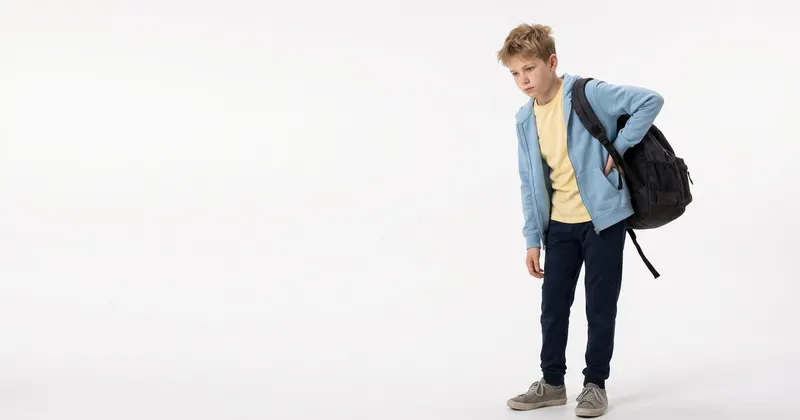
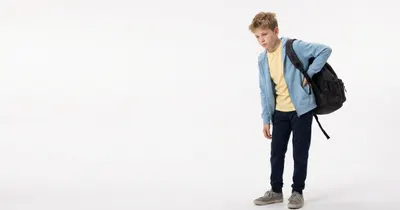
A twelve-year-old drops his backpack by the door and puts a hand on the small of his back. A few weeks ago he went over the handlebars of his bike. The MRI says his L5–S1 disc is "shifted forward." His parents ask the question every parent asks: did one fall do this?
열두 살 아이가 현관에 가방을 내려놓자마자 허리 아래쪽에 손을 얹어요. 몇 주 전 자전거를 타다 앞으로 넘어졌어요. MRI에서는 L5–S1 디스크가 "앞으로 쏠려 있다"고 했고요. 부모님은 다들 같은 걸 물으세요. 한 번 넘어진 것 때문에 이렇게 된 건가요?
To answer that, it helps to know how a spine and a disc are built. That's most of this article.
그 답을 하려면 척추와 디스크가 어떻게 생겼는지부터 알아야 해요. 이 글은 대부분 그 이야기예요.
The spine is a spring
척추는 용수철이에요
Seen from the side, a healthy spine isn't straight. The neck curves forward (cervical lordosis), the mid-back curves back (thoracic kyphosis), and the low back curves forward again (lumbar lordosis). That S-shape lets the spine give a little with every landing and every step, then spring back. A straight rod would pass each jolt straight up to the head.
옆에서 보면 건강한 척추는 곧지 않아요. 목은 앞으로(Cervical lordosis), 등은 뒤로(Thoracic kyphosis), 허리는 다시 앞으로(Lumbar lordosis) 휘어 있어요. 이 S자 덕분에 척추는 착지할 때마다, 걸을 때마다 살짝 눌렸다가 다시 펴져요. 곧은 막대였다면 충격이 그대로 머리까지 올라갔을 거예요.
Inside one disc
디스크 하나를 들여다보면
Between each pair of vertebrae sits an intervertebral disc. It has three parts.
척추뼈 사이마다 디스크가 하나씩 있어요. 세 부분으로 되어 있어요.
The nucleus pulposus is the gel in the middle. In a child it's mostly water, held by molecules that bind water the way a sponge does. Press on it and it doesn't flatten; it spreads the pressure out in every direction, like a water balloon.
Nucleus pulposus는 가운데의 젤리예요. 아이의 젤리는 대부분 물이고, 스펀지처럼 물을 붙잡는 성분이 그 물을 잡고 있어요. 위에서 누르면 납작해지지 않고 물풍선처럼 힘을 사방으로 흩어 줘요.
The annulus fibrosus wraps the gel in fifteen to twenty-five layers of tough fibre. Each layer runs at the opposite angle to the one before, like the strands of a woven basket, so whichever way the spine twists, half the fibres resist it.
Annulus fibrosus는 젤리를 15~25겹으로 감싼 질긴 섬유예요. 한 겹은 오른쪽으로, 다음 겹은 왼쪽으로 엇갈려 감겨 있어요. 대나무 바구니처럼요. 그래서 척추가 어느 쪽으로 비틀려도 섬유의 절반이 버텨요.
The endplates are thin cartilage plates above and below that join the disc to the bone. Nutrients pass through them.
Endplate는 디스크 위아래의 얇은 연골판이에요. 디스크를 뼈에 이어 주고, 영양분이 이 판을 통해 들어가요.
A disc has almost no blood vessels of its own. It drinks by moving. Each time the spine is loaded and unloaded, fluid is squeezed out and drawn back in, like a sponge in water. That's why a disc goes stiff after hours in one position, and why a child measured in the morning is often about a centimeter taller than in the evening.
디스크 안에는 혈관이 거의 없어요. 움직이면서 물을 마셔요. 척추가 눌렸다 풀릴 때마다 체액이 빠져나갔다가 다시 빨려 들어가요. 물속의 스펀지처럼요. 그래서 몇 시간씩 한 자세로 있으면 디스크가 뻣뻣해지고, 아침에 잰 키가 저녁보다 1cm 안팎 더 크게 나오기도 해요.
Neck, mid-back and low back discs are built differently
목·등·허리 디스크는 생김새가 달라요
The neck discs are small but thick for their size, because the neck is built to move. The mid-back discs are the thinnest; the ribs already hold that part of the spine steady, and the backward curve there comes from the wedge shape of the bones. The low back discs are the largest and carry the most weight, and the lowest two, L4–L5 and L5–S1, do the most work of all. In the low back, the gel sits slightly behind center, and the back wall of the annulus is thinner than the front.
목 디스크는 작지만 크기에 비해 두툼해요. 목은 많이 움직이게 만들어졌거든요. 등 디스크는 가장 얇아요. 갈비뼈가 이미 그 부분을 잡아 주고 있고, 등이 뒤로 휜 건 디스크가 아니라 뼈 자체의 쐐기 모양 때문이에요. 허리 디스크는 가장 크고 무게를 가장 많이 받아요. 그중에서도 맨 아래 두 칸, L4–L5와 L5–S1이 일을 제일 많이 해요. 허리 디스크는 젤리가 가운데보다 살짝 뒤에 있고, 테두리 뒤쪽 벽이 앞쪽보다 얇아요.
The gel moves with posture
자세에 따라 젤리가 움직여요
A disc isn't a fixed object. Bend forward and the front of the disc closes while the gel slides back. Arch backward and the back of the disc closes while the gel slides forward. When the back closes, two other things change: the small joints at the back of the spine, the facet joints, press together harder, and the opening where the L5 nerve root leaves the spine, the intervertebral foramen (IVF), gets shorter.
디스크는 고정된 물건이 아니에요. 앞으로 숙이면 디스크 앞쪽이 닫히면서 젤리가 뒤로 밀려요. 뒤로 젖히면 뒤쪽이 닫히면서 젤리가 앞으로 가요. 뒤쪽이 닫힐 때는 두 가지가 더 바뀌어요. 척추 뒤쪽의 작은 관절(Facet joint)이 서로 더 세게 맞닿고, L5 신경 뿌리가 척추 밖으로 나가는 창문(Intervertebral foramen, IVF)의 키가 낮아져요.
So when an MRI shows the gel settled forward and the back of the disc lowered, it's describing a disc that has spent a long time in the arched direction.
그래서 MRI에서 젤리가 앞쪽에 자리 잡고 디스크 뒤쪽이 낮아 보이면, 그 디스크는 젖힌 방향으로 오랜 시간을 보냈다는 뜻이에요.
Where the pain comes from
통증은 어디서 올까요
The gel itself can't hurt. It has no nerve endings. Only the outer third of the annulus does, supplied by a small branch called the sinuvertebral nerve. A fingernail works the same way: trim the tip and you feel nothing, press the skin at its base and you feel it at once. Disc pain means load has reached that outer wall.
젤리 자체는 아프지 않아요. 신경이 없거든요. 신경은 테두리 바깥쪽 3분의 1에만 있고, Sinuvertebral nerve라는 작은 신경이 맡고 있어요. 손톱도 그래요. 끝을 잘라도 아무 느낌이 없지만, 뿌리 쪽 살을 누르면 바로 아프죠. 디스크가 아프다는 건 무게가 그 바깥 벽까지 닿았다는 뜻이에요.
The facet joints are lined with a joint capsule that is full of nerve endings. When the back of the disc lowers, they carry more of the load, and they're the usual source of pain that's worse when a child arches backward or stands for a long time.
Facet joint는 신경이 많은 관절 주머니로 싸여 있어요. 디스크 뒤쪽이 낮아지면 이 관절이 무게를 더 받아요. 아이가 뒤로 젖힐 때나 오래 서 있을 때 더 아프다면 대개 여기서 와요.
The nerve root in the IVF can be irritated when the window narrows. Then the pain travels: buttock, back of the thigh, calf, sometimes with tingling. The L5 root feeds the outer calf and the top of the foot and lifts the big toe; the S1 root feeds the back of the calf and the sole and lets the child rise on tiptoe.
IVF 안의 신경 뿌리는 창문이 좁아지면 예민해질 수 있어요. 그러면 통증이 내려가요. 엉덩이, 허벅지 뒤, 종아리로요. 저림이 같이 오기도 해요. L5 신경은 종아리 바깥쪽과 발등을 맡고 엄지발가락을 들어 올려요. S1 신경은 종아리 뒤와 발바닥을 맡고 까치발을 서게 해요.
The muscles guard. Once the area is irritated, the deep back muscles stiffen like a splint and the hamstrings tighten. A splint left on too long aches on its own.
근육은 지키려고 굳어요. 그 자리가 예민해지면 허리 깊은 근육이 부목처럼 딱딱해지고 허벅지 뒤가 당겨요. 부목을 너무 오래 대고 있으면 그 자체로 뻐근하고 아파요.
A growing spine has its own soft spots
자라는 척추에는 따로 약한 자리가 있어요
Adults tend to wear out the disc wall first. Children are the reverse. A child's disc is plump and its wall is strong, but the bone around it is still maturing. The endplates and the ring apophysis, the bony rim around each vertebra, don't fully harden until growth ends. And the pars interarticularis, the thin bridge at the back of L5, takes most of the load when a child arches backward again and again. It's the most common place for a stress fracture in an active teenager's spine.
어른은 디스크 벽이 먼저 닳는 편이에요. 아이는 반대예요. 아이 디스크는 탱탱하고 벽도 튼튼하지만, 그 둘레의 뼈는 아직 자라는 중이에요. Endplate와 척추뼈 테두리(Ring apophysis)는 성장이 끝나야 다 단단해져요. 그리고 L5 뒤쪽의 가는 다리 Pars interarticularis는 아이가 허리를 반복해서 뒤로 젖힐 때 무게를 가장 많이 받아요. 운동하는 10대의 척추에서 피로골절이 가장 흔한 자리예요.
In a growth spurt, the bones lengthen first and the muscles catch up later. The psoas, the hip flexor that runs from the low back to the thigh, is one that lags. A short psoas pulls the low back forward and tips the pelvis forward. Standing, the belly drifts out and the low back sways. That's the arched direction, at L5–S1, all day long.
키가 쑥 크는 시기에는 뼈가 먼저 자라고 근육은 뒤늦게 따라와요. 허리에서 허벅지로 이어지는 엉덩이 굽힘근 Psoas가 잘 뒤처지는 근육이에요. Psoas가 짧으면 허리뼈를 앞으로 당기고 골반을 앞으로 기울여요. 서 있으면 배가 앞으로 나오고 허리가 쑥 들어가요. 하루 종일 L5–S1이 젖힌 방향에 있는 거예요.
So, did one fall do this?
그럼, 한 번 넘어져서 이렇게 된 걸까요
Most likely not on its own. A wedge-shaped L5–S1 disc with the gel settled forward is not a one-day change; discs reshape slowly to the load they carry every day. By the time of the fall, months of a swayed posture, a short psoas and a body growing faster than its muscles had already used up most of the room at the back of that disc.
혼자서 그랬을 가능성은 낮아요. 젤리가 앞쪽에 자리 잡은 쐐기 모양의 L5–S1 디스크는 하루 만에 생기지 않아요. 디스크는 매일 실리는 무게에 맞춰 천천히 모양을 바꿔요. 넘어질 무렵에는 허리가 쑥 들어간 자세로 보낸 몇 달, 짧아진 Psoas, 근육보다 빨리 자란 몸이 그 디스크 뒤쪽의 여유를 거의 다 써 버린 상태였을 거예요.
A glass that's nearly full overflows on the last drop. The overflow happens with that drop, but the glass was filled by everything before it. The fall was most likely the trigger; daily posture was what loaded it.
거의 찬 컵은 마지막 한 방울에 넘쳐요. 넘치는 건 그 한 방울 때지만, 컵을 채운 건 그 전의 물이에요. 넘어진 일은 방아쇠였을 가능성이 커요. 그걸 당길 수 있게 장전해 둔 건 매일의 자세였고요.
It matters which it is. If the fall were the whole story, you'd wait for it to heal. If posture is part of it, the same load keeps landing on the same spot, and the next small bump finds it again.
어느 쪽인지가 중요해요. 넘어진 게 전부라면 다친 곳이 낫기를 기다리면 돼요. 자세가 함께 있다면 같은 무게가 같은 자리에 계속 실리고, 다음 작은 충격에 또 같은 데가 아파요.
Riding a bike without loading the low back
허리에 짐을 싣지 않고 자전거 타기
A bike ride is the same leg motion thousands of times an hour, so small angles add up. The saddle rule is the knee: with the pedal at the very bottom and the ball of the foot on it, the knee should be almost straight but still slightly bent, around 25 to 35 degrees.
자전거는 한 시간에 같은 다리 동작을 수천 번 해요. 그래서 작은 각도가 쌓여요. 안장의 기준은 무릎이에요. 페달을 맨 아래에 두고 발 앞쪽을 올렸을 때, 무릎이 거의 펴지되 25~35도쯤 살짝 굽어 있어야 해요.
We posed a real 3D skeleton at a correct saddle and at one that's too low. With the low saddle, the knee stayed bent at 65 degrees at the bottom instead of 30, folded to 113 degrees at the top instead of 96, and the pelvis rolled back a few degrees more on every pedal stroke. The thigh muscle presses the kneecap hard into the joint, and the back muscles hold a rounded spine for the whole ride.
실제 3D 골격을 알맞은 안장과 너무 낮은 안장에 앉혀 비교해 봤어요. 낮은 안장에서는 페달 맨 아래에서도 무릎이 30도가 아니라 65도 굽어 있었고, 맨 위에서는 96도가 아니라 113도까지 접혔어요. 골반도 페달 한 바퀴마다 몇 도씩 더 뒤로 말렸고요. 허벅지 앞 근육이 무릎뼈를 세게 누르고, 허리 근육은 타는 내내 굽은 허리를 버텨요.
A saddle that's too high does the opposite damage. The leg can't reach the pedal, so the hips rock side to side on every stroke and the low back bends sideways with them.
너무 높은 안장은 반대쪽으로 탈이 나요. 다리가 페달에 닿지 않으니 한 바퀴마다 엉덩이가 좌우로 흔들리고, 허리도 그때마다 옆으로 꺾여요.
Re-check the saddle every few months. Last year's height is too low this year. · 몇 달마다 안장을 다시 보세요. 작년에 맞춘 높이는 올해 낮아요.
Handlebar reach. If your child has to stretch to reach the bars, the low back either rounds or arches to make up the distance. Elbows should stay soft. · 핸들까지 거리. 핸들에 손이 닿으려고 몸을 쭉 뻗어야 한다면, 허리가 둥글게 말리거나 젖혀지면서 그 거리를 메워요. 팔꿈치는 살짝 굽어 있어야 해요.
Ride from the hips. Standing on the pedals uphill, the push should come from the hips and legs while the trunk stays steady. · 엉덩이로 타기. 언덕에서 일어서서 밟을 때도 힘은 엉덩이와 다리에서 나오고 몸통은 버텨야 해요.
Helmet, always. A fall onto the head is a different and more serious problem than a sore back. · 헬멧은 언제나. 머리로 넘어지는 건 허리 통증과는 다른, 훨씬 큰 문제예요.
Soccer and the low back
축구와 허리
Soccer is the sport most kids here play, and it asks a lot of the low back. Every kick is a fast hip flexion driven by the psoas and the front of the thigh, with the trunk arching back to wind up. A season of kicking during a growth spurt can leave the psoas even shorter, and the wind-up repeats the arched load on the pars and the facet joints at L5–S1. Taekwondo kicks, gymnastics and dance load the same place in the same way.
축구는 이 동네 아이들이 가장 많이 하는 운동이고, 허리에 많은 걸 요구해요. 킥은 매번 Psoas와 허벅지 앞 근육이 고관절을 빠르게 굽히는 동작이고, 그 전에 몸통을 뒤로 젖혀 힘을 모아요. 키가 크는 시기에 한 시즌 내내 킥을 하면 Psoas가 더 짧아지기 쉽고, 힘을 모으는 젖힘이 L5–S1의 Pars와 Facet joint에 같은 무게를 반복해서 실어요. 태권도 발차기, 체조, 무용도 같은 자리에 같은 방식으로 무게를 실어요.
Watch for sudden jumps in training. A new team, a tournament weekend or a second season stacked on the first, especially in a growth spurt. · 훈련량이 갑자기 늘 때 조심하세요. 새 팀, 대회 주말, 시즌이 겹칠 때요. 키가 크는 시기라면 더요.
Keep the hip flexors long. A short psoas is one of the most common things we find in kicking athletes with back pain. · 엉덩이 굽힘근을 길게 유지하세요. 킥을 많이 하는 아이가 허리가 아플 때 저희가 흔하게 찾는 게 짧아진 Psoas예요.
Build the cylinder before more reps. · 횟수를 늘리기 전에 원통부터 만드세요.
Take pain with arching seriously. Low back pain that's worse leaning back, in a kid who kicks or arches a lot, is worth an exam rather than a few more weeks of playing through it. · 젖힐 때 아픈 허리는 가볍게 넘기지 마세요. 킥이나 젖히는 동작이 많은 아이가 뒤로 젖힐 때 허리가 더 아프다면, 몇 주 더 참고 뛰기보다 검사를 받아 볼 일이에요.
The cylinder comes before the sport
운동보다 원통이 먼저예요
The core isn't about squeezing the abs. It's a cylinder: the diaphragm on top, the deepest abdominal muscle (transversus abdominis) around the sides, the multifidus along the back, the pelvic floor below. A full breath raises the pressure inside it, and a pressurized cylinder holds the spine the way a sealed bottle refuses to crush.
코어는 배에 힘을 꽉 주는 게 아니에요. 원통이에요. 위는 Diaphragm, 옆은 가장 깊은 배 근육(Transversus abdominis), 뒤는 Multifidus, 아래는 Pelvic floor. 숨을 깊이 들이쉬면 원통 안 압력이 올라가고, 압력이 찬 원통은 뚜껑 닫힌 페트병처럼 쉽게 찌그러지지 않아요. 그 안에서 척추가 버텨요.
With the cylinder holding, force from the legs passes through the trunk instead of bending the low back. Then the hip hinge: a stick along the back touching the head, the upper back and the tailbone, folding at the hips without losing any of the three. Then the bike and the ball come back. (More on the cylinder in The Spine Under Gravity.)
원통이 버티면 다리에서 올라온 힘이 허리를 꺾지 않고 몸통을 그대로 지나가요. 그다음 Hip hinge예요. 막대를 등에 대고 뒤통수, 등 위쪽, 꼬리뼈 세 군데가 닿은 채로 엉덩이에서 접어요. 그리고 자전거와 공으로 돌아가요. (원통 이야기는 중력 아래의 척추에 더 있어요.)
X-ray, CT and MRI each answer a different question
X-ray, CT, MRI는 서로 다른 질문에 답해요
MRI reads water, so it shows the disc, the gel and the nerves, and it's the first to catch bone that's swollen from strain. But the hard outer shell of bone shows up black on MRI, and a fine crack in a black plate is hard to see. X-ray and CT show bone white, so a crack shows as a line; CT shows it most clearly. Standing X-ray is also the only one taken with the body's weight on the spine.
MRI는 물을 읽어서 디스크, 젤리, 신경을 보여 줘요. 무리해서 뼈 속이 부은 것도 가장 먼저 잡고요. 그런데 단단한 뼈 껍질은 MRI에서 까맣게 나와서, 까만 접시에 간 가는 금은 잘 안 보여요. X-ray와 CT는 뼈를 하얗게 보여 줘서 금이 선으로 드러나요. CT가 가장 선명해요. 그리고 몸무게가 실린 상태로 서서 찍는 건 X-ray뿐이에요.
Why a chiropractor looks at this
왜 카이로프랙터가 이걸 볼까요
A chiropractor's whole training is the spine as a moving structure: how each segment moves against the next, how load travels through it, and how the nerves that leave it behave. That's exactly the question here. Not "is there a disc on the picture," but "which segment stopped moving, which one is taking the load for it, and why."
카이로프랙터는 척추를 움직이는 구조로 배우고, 그걸로 일해요. 마디 하나하나가 옆 마디와 어떻게 움직이는지, 무게가 그 안을 어떻게 지나가는지, 거기서 나가는 신경이 어떻게 반응하는지요. 이번 질문이 딱 그거예요. "사진에 디스크가 보이나"가 아니라 "어느 마디가 움직임을 멈췄고, 어느 마디가 그 대신 무게를 떠안고 있고, 왜 그런가"예요.
At Levitas, Dr. Yun reads the spine segment by segment with his hands, and on standing X-rays he draws lines across each vertebra to measure the curve and the pelvis on the original films. Before chiropractic he spent more than twelve years as a rehabilitation trainer, coaching movement and load for athletes, and he competed in kendo at the national amateur level, representing Seoul. He knows from the inside what a sport asks of a growing back, and how to bring a kid back to it.
Levitas에서는 윤길보 원장이 척추를 손으로 마디마디 읽고, 서서 찍은 X-ray 원본 위에 척추뼈마다 선을 그어 휨과 골반을 재요. 카이로프랙틱 전에는 12년 넘게 재활 트레이너로 선수들의 움직임과 부하를 지도했고, 서울 대표로 전국 대회에 나간 검도 선수였어요. 운동이 자라는 허리에 무엇을 요구하는지, 아이를 어떻게 다시 운동으로 돌려보내는지 몸으로 알아요.
What a visit looks like
진료실에서는 이렇게 봐요
We start with your child, not the films. Bending forward and arching back: which hurts, and where. Heel walk, toe walk and a big-toe lift, side by side, to check the L5 and S1 nerves. Psoas and hamstring length, how far the hips actually go, which way the pelvis tilts, how each lumbar segment moves under our hands. Whether your child can breathe into the cylinder and bend at the hips. Then the films.
필름보다 아이를 먼저 봐요. 앞으로 숙일 때와 뒤로 젖힐 때 어느 쪽이 아프고 어디가 아픈지. L5와 S1 신경을 보려고 뒤꿈치 걷기, 까치발 걷기, 엄지발가락 들기를 좌우로 비교해요. Psoas와 Hamstring 길이, 고관절이 실제로 어디까지 가는지, 골반이 어느 쪽으로 기울었는지, 허리 마디마다 손에 어떻게 움직이는지 봐요. 숨으로 원통을 만들 수 있는지, 엉덩이에서 접을 수 있는지도요. 그다음 필름을 봐요.
Everything we find, we explain to both of you, in English or Korean. Then we get the pain down, restore motion to the segments that stopped moving with gentle, child-appropriate adjustments, and lengthen what growth left short. After that comes the order that keeps it: the cylinder, the hinge, the sport.
찾은 것은 아이와 부모님 모두에게 영어로도, 한국어로도 설명해 드려요. 그다음 통증을 내리고, 움직임이 멈춘 마디는 아이에게 맞는 가벼운 교정으로 다시 움직이게 하고, 성장 때문에 짧아진 근육을 늘려요. 그 뒤가 좋아진 걸 지키는 순서예요. 원통, Hip hinge, 그리고 운동이요.
At the first visit we also ask about the things that change the plan before anything else: leg weakness that's getting worse, numbness that's spreading, pain that wakes your child at night, fever with back pain, any change in bladder or bowel control, or numbness around the groin.
첫 방문에서는 무엇보다 먼저 계획을 바꾸는 것들도 여쭤봐요. 다리 힘이 점점 빠지는지, 저림이 넓어지는지, 밤에 깰 만큼 아픈지, 허리 통증에 열이 같이 나는지, 소변이나 대변 조절이 달라졌는지, 사타구니 감각이 둔해졌는지요.
The good news about a young spine
어린 척추라서 좋은 점
A child's disc is full of water and quick to respond when the load on it changes. Movement habits change faster at twelve than at forty. What a kid learns now about carrying load stays after the growing is done.
아이 디스크는 물이 많아서 실리는 무게가 바뀌면 반응이 빨라요. 몸 쓰는 습관도 마흔보다 열두 살에 훨씬 빨리 바뀌고요. 지금 익힌 몸 쓰는 법은 키가 다 큰 뒤에도 남아요.
Come in clothes your child can bend and twist in, and bring any films you have.
아이가 숙이고 비틀기 편한 옷을 입고 오세요. 찍어 둔 필름이 있으면 함께 가져와 주세요.
Thanks for reading. Questions are welcome by phone or email. We answer every one.
읽어 주셔서 고마워요. 궁금한 건 전화나 이메일로 편하게 물어보세요. 하나하나 답해 드려요.
The child in this article is an illustration, not a patient. Anatomy figures in the brochure are drawn from BodyParts3D (© The Database Center for Life Science, CC BY-SA 2.1 Japan).
이 글 속 아이는 그림 속 인물이에요. 브로셔의 해부 도해는 BodyParts3D 데이터로 그렸어요.
View the full brochure · 브로셔 전체 보기